You are at: Home » Essential Info » Book Reviews » The Earth Care Manual - Patrick Whitefield (2004)

Transition Culture

An Evolving Exploration into the Head, Heart and Hands of Energy Descent


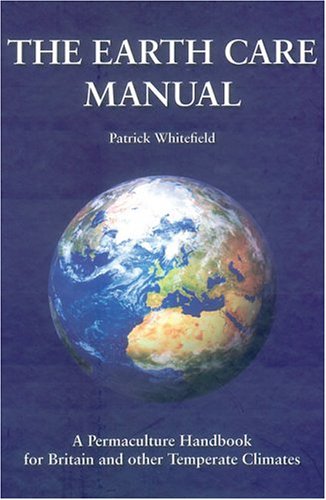
The Earth Care Manual - Patrick Whitefield (2004)

The Earth Care Manual - Patrick Whitefield. Permanent Publications (2004)

pw

Until now, the most complete exposition of permaculture in print has been Bill Mollison’s ‘Permaculture – a Designers Manual’. When it first appeared back in 1988 it was an extraordinary piece of work. At once revolutionary, scholarly and practical, it was a call to arms for the environmental movement, a challenge to begin building the world we all want to see from the ground up. Huge in scope, the Designers Manual covers so much ground as to almost be overwhelming. I often tried to imagine Bill sitting down in front of his word processor, licking his lips and saying, “ right, page 1…�, but could never quite visualise it.

For most of us involved in permaculture, the Designers Manual has been a bible; we all love it and are in awe of what it contains and the implications thereof, but few of us, I suspect have ever read it from cover to cover. One reason for this is that, unless we plan to go and work in far hotter climes than these, entire chapters of the book are irrelevant. This is the inevitable result of trying to write a universal design manual, which is, ironically, one of the book’s strengths. Since its publication in 1988 it has gone through many reprints, but has never been revised or updated. As a result, some of it now is a bit out of date, much of his material on, say, reed beds or natural building, has been greatly built on since by the wider permaculture movement. What has been needed for a while now is a Designers Manual specific to our climate, and it is telling that it has taken this long for the wider temperate permaculture community to grow and acquire the depth of understanding needed to produce a book like ‘The Earth Repair Manual’.

Patrick Whitefield has been teaching permaculture almost since it first arrived on these shores, and has a wealth and depth of experience which is almost unrivalled. He teaches widely and is recognised as one of the foremost voices articulating what permaculture might actually mean to those of us in temperate Europe. This book took him 7 years to write, and this huge input of time and energy is clear when you first get your hands on a copy - this is a big book.

Patrick begins with the principles and ethics of permaculture, and then looks in detail at the basics, the building blocks we, as permaculture designers, have to work with. These include soil, fertility, water, climate, microclimate, energy and materials, all gone into in great detail. The chapter on soils is excellent, proving that really you don’t need a degree in soil science to understand what is going on under your feet. The chapter on energy cuts to the chase, we use too much energy, and we need to use less. Once he has explored the issues and the problems, he offers us solutions, mostly ones achievable on a domestic scale.

In the second part he looks at permaculture as applied to a range of situations, to buildings, gardens, orchards, farms, woodlands and biodiversity. For me the highlight of the book is the section on nut growing. The argument for shifting our agriculture in the direction of nut-based agroforestry is one of such blatant common sense that it is a constant source of amazement that nothing much really seems to be happening to make it a reality. Philip Rutter, who has been doing a lot of research into nut production in the US, has written that to have fully-tested climate-specific nut varieties in widespread production will take us 60 years. We urgently need to get started, and this section of the book is passionately argued and well backed up with research.

His look at farming offers a way forward for agriculture which is currently in the doldrums. Diversity, direct marketing, Farmers’ Markets, a holistic approach, all this is excellent stuff. Patrick clearly spends a lot of time visiting farms around the country, and the text is peppered with examples of people here and there doing pioneering work. While he is obviously deeply passionate about farms and farming, he also doesn’t shy away from the fact that most of us live in towns and cities, and much of his gardening section is dedicated to urban backyards, and techniques for small spaces. The same with fruit growing, there is something there for every situation.

In the final section, Patrick turns to design, how we put all this together, in a holistic, well designed way. This after all is what distinguishes permaculture from organics; permaculture is about design, it is the design glue that sticks all the different elements of a sustainable set-up together. Patrick’s section on design comes in two parts, the first is on how to design, and the second is on tools for the designer. The first section is very clear and straightforward, as well as being very encouraging, ‘go on, have a go’… . The steps he sets out for the designer are very clear and straightforward, and are clearly based on many years experience. The design tools are also very useful, being clearly set out and easy to use. The whole section is very illuminating; even for people who have been designing for a while, there are new insights in seeing Patrick’ own approach to both the client and to the site itself.

‘The Earth Repair Manual’, put simply, is fantastic. It is what I have been waiting for for years, and it is what those of us in temperate climates have urgently needed. Patrick’s considerable experience in the fields of woodlands and fruits growing shine through especially strongly, but the whole book is rich with vision and experience. I especially like how he has taken Peter Harper’s ‘Quit While You’re Ahead’ principle to heart (which basically encourages us to take the actions which will have the most effect in preference to those with a lesser effect), and in his chapter on buildings, focuses mainly on existing housing, rather than the temptation for permaculturists to write reams about cob and strawbale housing, an option only open to a few, while most of us are left wondering what to do with our existing houses. All the way through the emphasis is on what works, and what actually has an effect, rather than dogmatic sacred cows.

Is there anything I’d like to have seen done differently? Perhaps a section on peoplecare would have been good. Patrick makes clear from the start that he isn’t going to do a section on economics, as it is not his forte, but a section on what permaculturists call ‘invisible structures’ might have been useful, how permaculturists can work within the Agenda 21 process, and the kind of work that the Bioregional Development Group are doing, strengthening and rebuilding community. In Bill Mollison’s book, the final chapter, ‘The Strategies of an Alternative Global Nation’ is excellent, although now slightly dated, and much experience has been gained over the years from people working on the ground in this area. Does the absence of this people care angle mean that a second volume is planned, more in the vein of ‘The People Care Manual’? Also, I wondered whether a section on patterns might have fitted in nicely - the section on patterns in the Designers Manual is one of its most fascinating, but probably least read sections. I think an understanding of pattern is very useful in permaculture, and I would love to have read Patrick’s take on that.

As a teacher of permaculture, this book is a gift from the heavens. Until now, I had no book I could use as a course companion, information was spread about in the pages of various books and photocopied handouts, finally here it all is in one volume. The book is rich with insight and practical advice, here you will find the figures on how many hectares of coppice you need to heat a house, how to calculate the rainfall off a roof, how long different timbers will last outdoors once you have made them into fences. The species lists are excellent, the pictures are clear and illuminating, and the resources section is very useful. I also really liked the way that each chapter ends with an example of someone’s practical experience. This not only ties the theory in with real peoples’ everyday lives but also reminds the reader of the wider movement out there and the wealth of work being done at grassroots level by ordinary people.

With this book, permaculture in these islands comes of age. At last we have our own source of reference; no longer will people be able to say ‘oh permaculture, that only really works in Australia’ or ‘that’s a kind of gardening isn’t it?’ In the same way that the organic movement is often traced back to Lady Eve Balfour ‘The Living Soil’, and the environmental movement to Rachel Carson’s ‘Silent Spring’, future generations will look back on this as the book that defined what permaculture means to those of us living in temperate zones.

Patrick has defined what makes the permaculture philosophy distinct from any other (although not to the depth of David Holmgren’s recent ‘Permaculture – principles and pathways beyond sustainability’, which goes much deeper on the permaculture as a way of thinking angle…). He has pulled together the knowledge that has been accumulating here since the first Design Courses in the 1980s. What he offers is common sense solutions rooted in the culture and climate of these islands.

We, as a species are in a unique position, of being able to see a crisis unfolding, and still being able, with ingenuity, imagination and determination, to create a path through it that will lead us to a place far more pleasant than the one we currently inhabit. It is our job as permaculturists to persuade people that a future without unlimited fossil fuels, and with greatly reduced oil consumption will actually be a preferable place, with healthier homes, regenerated communities, clean food, local economies, a culture of abundance and conservation, rather than excessive consumption and wage slavery. We are doing this in the face of a fear-based idea that the end of oil means the end of us, which indeed, unless we begin rapidly to implement the contents of this book, is inevitably true. This book is a clear and unarguable road map to where we need to go, an A-Z to sanity and commonsense.

Patrick deserves our praise and thanks for this monumental achievement. I hope that he now gets to become a recliner rather than a designer for a short while, and gets to rest after what must have been a huge task. He has created a manual with which we can repair this beautiful jewel of a planet which we are fortunate enough to inhabit, and in so doing has given us a truly precious gift.