I was delighted recently to be asked to speak at the Earth Building UK conference, held this year at Dartington, near Totnes. As regular readers will know I have had a deep and long-lasting love affair with earth building, and indeed many of those who inspired and trained my fumblings into the world of cob homes, strawbale walls and clay plasters were there in the audience. In the context of the soon-to-be-released ‘Totnes & District Local Economic Blueprint’, I looked at two projects in Totnes and their potential to do a lot more than just provide houses. It was a shame I could only get there for the final session as the whole day looked mouth-watering. The bits I did hear were great: I had never, for example, heard of the ‘mud and stud’ technique before, a method particular to Lincolnshire. Fascinating stuff. Anyway, here’s my talk:
Here is a beautiful short film, which will brighten any Thursday morning, about Transition in Brazil. It looks at what Transition looks like in 2 different communities there, Brasilandia in Sao Paolo, and Granja Viana. Made by the Permacyclists, it is an uplifting glimpse of how Transition is taking root there. I love the quote at the end: “A movement which brings sadness and suffering isn’t sustainable”.
December is one of the quieter times for Transition initiatives, but even so, we’ve quite a packed December round-up for you. We start, seasonally, with two Winterfests, a seasonal opportunity to celebrate and reflect on what a Transition group is up to. We’ll start in Stroud, with this short film of the Transition Stroud Winterfest:
Let’s start this month’s bumper round-up (which contains some of the finest short films about Transition among many many other things) with the news that Transition Network has just been named as the winner of the highly prestigious European Economic and Social Committee’s Civil Society Prize. This is great recognition for the work of the REconomy Project and so many people in hundreds of European local communities who are engaging their local civil society in developing low carbon futures and livelihoods which promote wellbeing for all in the community. There are more than 500 Transition initiative community groups in 23 European countries (more than 1000 groups worldwide) who are working on the “transition” to a low-carbon, socially-just future.
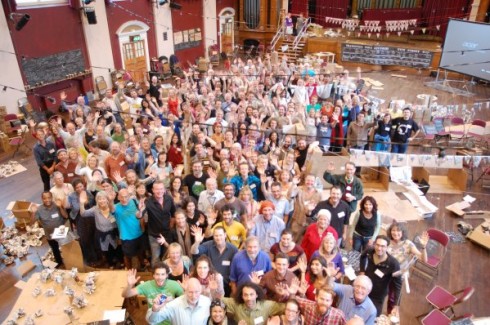
Transition folks from around the world gathered last weekend at Battersea Arts Centre for the 6th annual Transition Network conference. In a week when the Arctic ice reached its smallest ever extent, scientists warned that the world’s weather could be on the verge of running amok and it was suggested that Saudi Arabia, always meant to be the ‘swing producer’ on whom the rest of the world could depend for reliable oil supplies, may become a net importer of oil by 2030, the theme of the conference was, appropriately, ‘Building resilience in extraordinary times’. Unlike previous conferences which had spanned two, perhaps three days, this was, in effect, a 6 day ‘Festival of Transition’, and it turned out to be an extraordinary event which deeply affected those attending.
How might our response to peak oil and climate change look more like a party than a protest march? This site explores the emerging transition model in its many manifestations
Read more»