We’ll start this month’s round up in South Africa. We loved this video from German TV about Transition Town Greyton, and the work they are doing. Wonderful stuff. Altogether now: “Stuff your bottles, clean up your town”…
This month’s round up comes to you with a new added source of material, Twitter. There are hundreds of Transition initiatives on Twitter, and they offer a more intimate insight into what’s happening on the ground, stories that wouldn’t necessarily warrant a blog or make the local press, but which offer a great sense of what people are doing. Hopefully you’ll agree that this month’s round up is all the richer for it. Feels to me like the fullest and most vibrant we’ve yet produced.
Here’s a fantastic video from DW (“Germany’s International Broadcaster”) about Transition in South Africa. It is a clip from a longer programme called ‘Global 3000: The Globalisation Program’, and it looks at the work of Transition Town Greyton in South Africa. It is a fascinating response to the question of “what does Transition look like beyond Europe and the US?” It may well become one of my favourite videos about Transition:
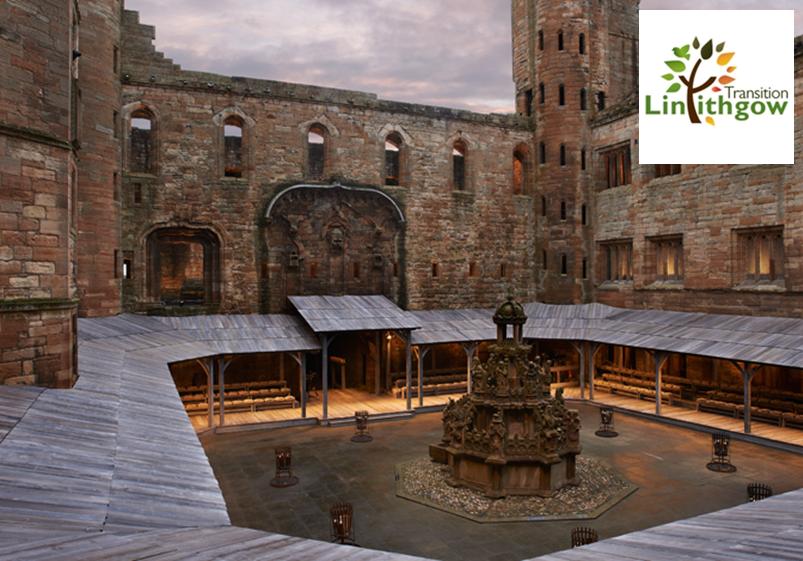
Apologies for the title, I couldn’t help myself. Here’s a story from Linlithgow in Scotland, one which includes a request for your ideas. So, last November Chanel held the rather swanky and illustrious ‘Chanel Metiers d’Art’ fashion show at Linlithgow Palace, famous for being where Mary Queen of Scots first came into the world. The Palace’s courtyard was used for the show, and was suitably glammed up, with the addition of a large see-through tent on the grounds outside and the creation of a covered platform/stage thing running round the inside of the Palace.
Here’s a newspiece about it, complete with Karl Lagerfeld:
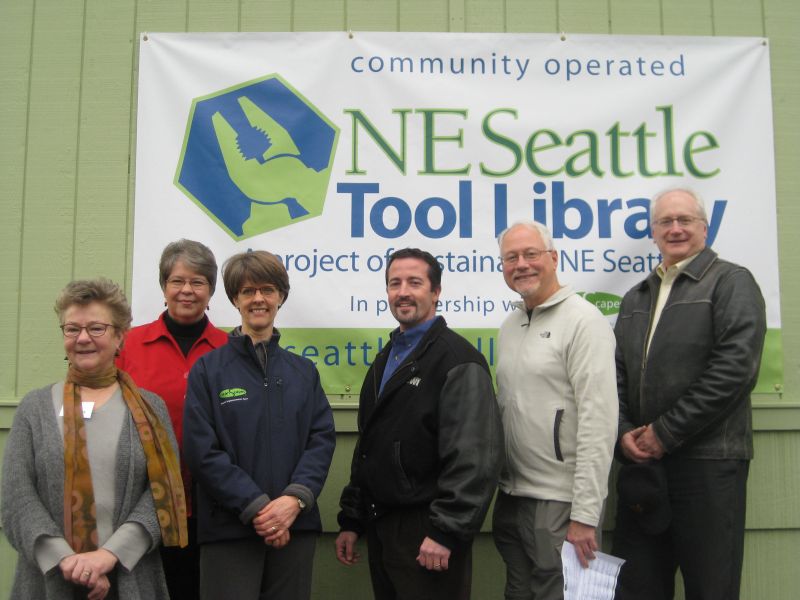
Susan Gregory (NE Seattle Tool Library), Pastor Lorraine Watson (North Seattle Friends Church), Signe Gilson (Cleanscapes), Dai Gorman (Lease Crutcher Lewis), Richard Conlin (Seattle City Council), and Tim Croll (Seattle Public Utilities) at the opening day for the Library.
Here is a wonderful story from Seattle. I am indebted to Susan Gregory and Leo Brodie for their time in telling me about it. In North Ravenna, NE Seattle, a rather exciting project has emerged from Sustainable NE Seattle, the local Transition initiative. Inspired by a similar project in West Seattle, the NE Seattle Tool Libraryopened to the public last month, and already has over 1,100 tools available for local people to hire. Members pay an annual membership and can then borrow tools for a week at a time. The Tool Library is housed in a building belonging to a local church which was renovated using a grant from a local recycling company. I asked Susan to tell me about the Library, how it came about and how it works:
How might our response to peak oil and climate change look more like a party than a protest march? This site explores the emerging transition model in its many manifestations
Read more»