We’ll start this month’s round up in South Africa. We loved this video from German TV about Transition Town Greyton, and the work they are doing. Wonderful stuff. Altogether now: “Stuff your bottles, clean up your town”…
This month’s round up comes to you with a new added source of material, Twitter. There are hundreds of Transition initiatives on Twitter, and they offer a more intimate insight into what’s happening on the ground, stories that wouldn’t necessarily warrant a blog or make the local press, but which offer a great sense of what people are doing. Hopefully you’ll agree that this month’s round up is all the richer for it. Feels to me like the fullest and most vibrant we’ve yet produced.
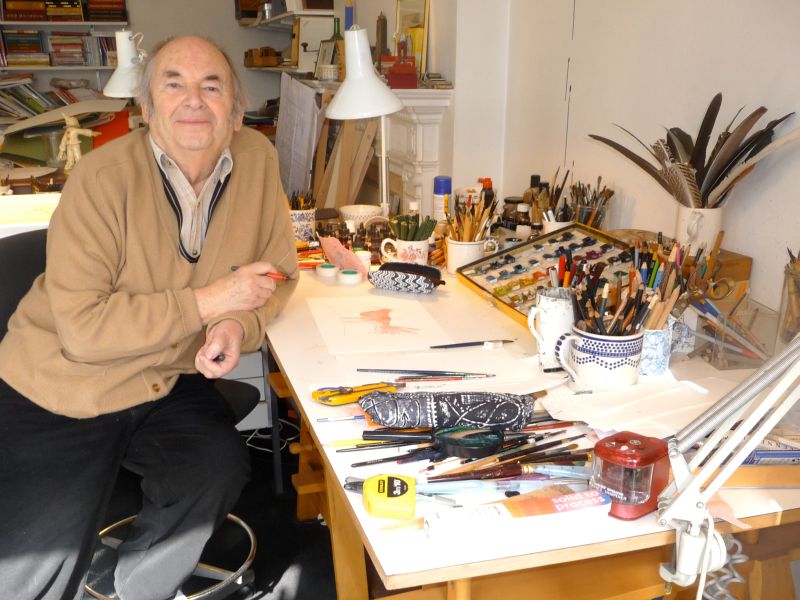
I was at Hay Festival last week and had the pleasure of spending an hour listening to one of my great heroes, the illustrator, Sir Quentin Blake. His lecture was entitled In and out of the book – the uses of illustration (you can see the transcript of his talk here). The first part of his talk looked at the role of illustration in bringing stories to life and in introducing children to the joys of reading. It was the second half of the talk though which I found most fascinating. He talked about the work he has been doing most recently in hospitals, and the power of illustration to help people in a variety of therapeutic situations and life transitions. It really got me thinking about what role illustration could play in Transition in its widest sense.
In November 2006, I sat at the back of the Barn Cinema, Dartington, and watched ‘An Inconvenient Truth‘. It had such an impact on me that by the time it ended, I had decided that I couldn’t just leave the cinema without marking the event by making some kind of change in my life. I decided that evening not to fly again, and I haven’t flown since. I have played an active part in supporting the growth of an international movement in 40 countries since then, participating in countless workshops, and discussing Transition internationally through Skype and pre-recorded talks, most of which I begin with how much carbon I have saved by not travelling in person. However, I recently watched the film ‘Chasing Ice’, and it had, if anything, a more visceral impact than ‘An Inconvenient Truth’. My resolution at the end of watching it, re-enforced by the recent passing, for the first time, of 400 ppm of C02 in the atmosphere, was that it was time to get back on a plane, and I want to use this post to tell you why.
A lot of people commented that they couldn’t watch the version of the recent webinar we did with Joanna Macy and Chris Johnstone due to not having Flash or somesuch, so we loaded it onto YouTube and now anyone anywhere can enjoy it!
Here is the video of yesterday’s webinar which I hosted and which featured Joanna Macy and Chris Johnstone. I hope you enjoy it, and thanks to everyone who participated, logged in and who helped make it happen. The feedback on the technology was great, and we’ll certainly be doing more of them in the near future.
How might our response to peak oil and climate change look more like a party than a protest march? This site explores the emerging transition model in its many manifestations
Read more»