Thanks to Transition Town Freiburg in Germany for this. Horst Köhler, recently-resigned German president (and former president of the IMF) gave a speech to a big world mobility conference (i.e. lots of car companies in the audience), in which he waxed lyrical about Transition! And a few days later he stood down. Here is the video of his talk, followed by a translation of what he said.
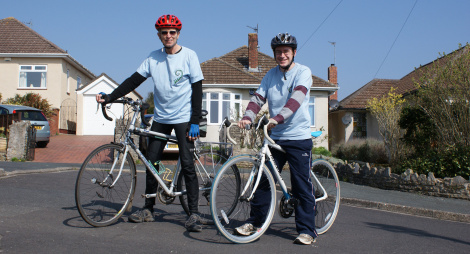
We start this month’s Round Up with the first of two awards we’ll be giving out this month, the ‘Dedication to Transition Above and Beyond the Call of Duty Award’. It goes to David and Mark of Transition Keynsham, who will be taking part in the Exmouth Exodus bike ride to raise much needed funds for Transition Keynsham. The Exodus ride is an overnight bike ride from Clifton to Exmouth, a total of around 100 miles with a few hills along the way! If you would like to sponsor them, or send them encouraging words, please click here. Every little helps (as they say).
Here is the video of yesterday’s webinar which I hosted and which featured Joanna Macy and Chris Johnstone. I hope you enjoy it, and thanks to everyone who participated, logged in and who helped make it happen. The feedback on the technology was great, and we’ll certainly be doing more of them in the near future.
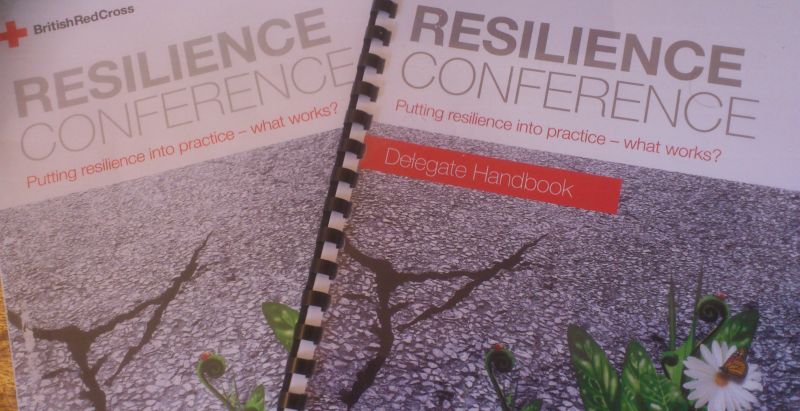
Usually when I go to events I tend to be the ‘resilience guy’, or one of a handful of people who work with and think about resilience who tend to gather at the back of other events and bemoan the fact that no-one has talked about resilience yet. So I was fascinated when I saw that the British Red Cross was hosting a one-day conference on resilience, the first that I’ve been aware of. They had stated that the objectives of the day were to:
share and generate learning on how resilience building works in practice in various settings and from a variety of perspectives – in other words, what works well and why?
understand how humanitarian agencies can effectively contribute to building resilience within communities.
About 200 people attended, including researchers and policy-makers, community activists, people involved in refugee services,emergency/humanitarian response,health and social care and age-related resilience. It was a fascinating day, and one that I’d like to share five of my lightbulb moments from the day.
In the last of this series of short videos about the Totnes & District Local Economic Blueprint, David Seymour of Bridgetown Stores in Totnes discusses its implications for the local economy.
How might our response to peak oil and climate change look more like a party than a protest march? This site explores the emerging transition model in its many manifestations
Read more»