Here’s a fantastic video from DW (“Germany’s International Broadcaster”) about Transition in South Africa. It is a clip from a longer programme called ‘Global 3000: The Globalisation Program’, and it looks at the work of Transition Town Greyton in South Africa. It is a fascinating response to the question of “what does Transition look like beyond Europe and the US?” It may well become one of my favourite videos about Transition:
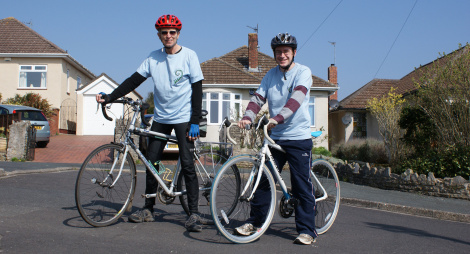
We start this month’s Round Up with the first of two awards we’ll be giving out this month, the ‘Dedication to Transition Above and Beyond the Call of Duty Award’. It goes to David and Mark of Transition Keynsham, who will be taking part in the Exmouth Exodus bike ride to raise much needed funds for Transition Keynsham. The Exodus ride is an overnight bike ride from Clifton to Exmouth, a total of around 100 miles with a few hills along the way! If you would like to sponsor them, or send them encouraging words, please click here. Every little helps (as they say).
Here is the video of yesterday’s webinar which I hosted and which featured Joanna Macy and Chris Johnstone. I hope you enjoy it, and thanks to everyone who participated, logged in and who helped make it happen. The feedback on the technology was great, and we’ll certainly be doing more of them in the near future.
How does this resonate with your experience of being involved in Transition? Your group is highly effective, generally harmonious, communicates clearly and effectively, has power dynamics which are understood and enjoyed by everyone, deals creatively with conflict and runs its meetings in such a way that people look forward to them and love being part of them. If your answer sits anywhere between “absolutely not” and “hmmm”, then you might enjoy this short video:
https://youtu.be/NmEC3BCOBq8
It’s an introduction to Transition Training’s new ‘Effective Groups’ training and resources, developed by trainer Nick Osborne, who also narrates it. I spoke to Nick, and what follows is a choice of audio from our conversation broken into different questions, or some notes for those who would rather read the key points.
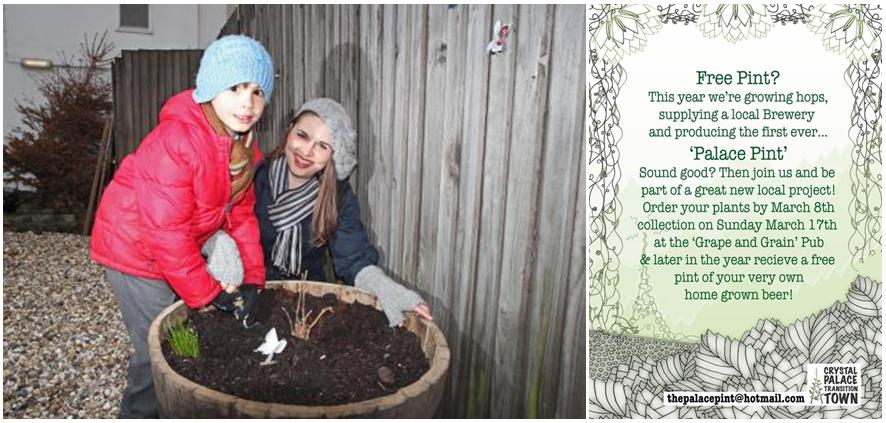
We’ll start this month’s Round up in Crystal Palace in London, and news of the ‘Palace Pint’. Crystal Palace Transition Town started the initiative inspire by the nearby ‘Brixton Beer’, and more than 80 people have now planted hops in their gardens as part of the scheme. CPTT have teamed up with local brewers Late Knights in Penge, who will brew a special brew using the hops and who will also run sessions throughout the year where people can learn to brew. Hops were also planted in the Crystal Palace Museum Garden and in the Grape and Grain pub’s Tipsy Garden (see pic above).
How might our response to peak oil and climate change look more like a party than a protest march? This site explores the emerging transition model in its many manifestations
Read more»
 Here’s a fantastic video from DW (“Germany’s International Broadcaster”) about Transition in South Africa. It is a clip from a longer programme called ‘Global 3000: The Globalisation Program’, and it looks at the work of Transition Town Greyton in South Africa. It is a fascinating response to the question of “what does Transition look like beyond Europe and the US?” It may well become one of my favourite videos about Transition: