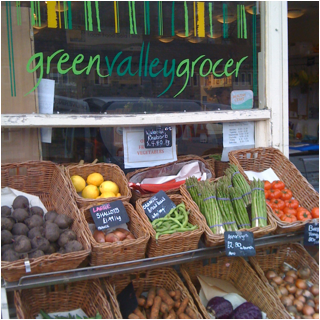
From West Yorkshire here’s an exciting story to start with. At the Colne Valley Local Food Festival, Marsden & Slaithwaite TT have joined forces with other local groups (Handmade Bakery, Edibles and Green Valley Grocer) to form a Declaration of Independence from the global network of food! Go Colne Valley! Here’s a short film about the Green Valley Grocer:
Part of this process has been developing a Colne-U-Copia brand for locally produced food. A bold initiative we’ll keep an eye on in future round-ups.
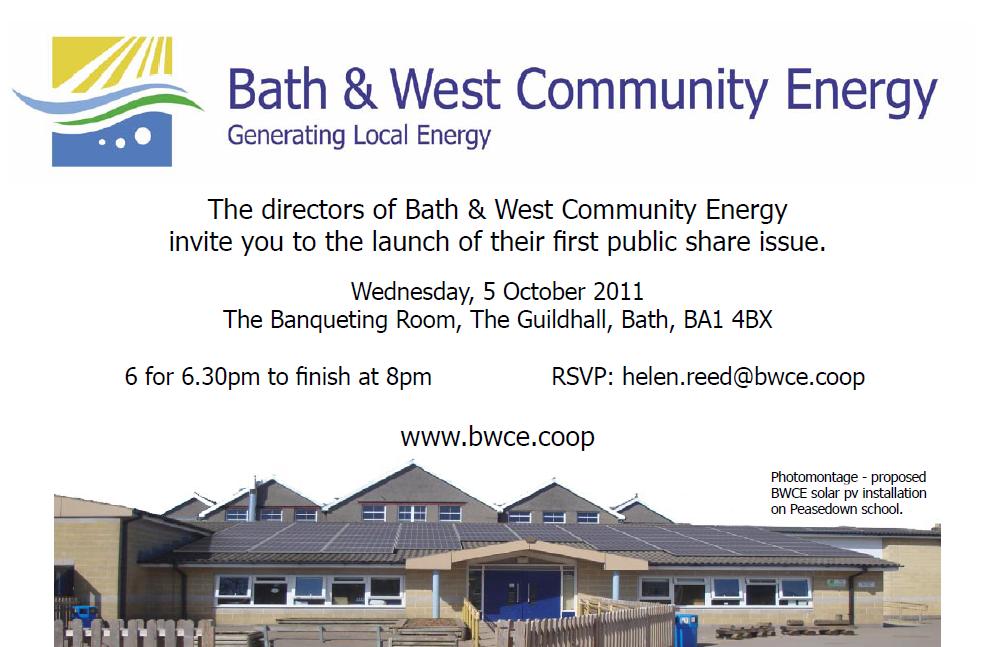
Another community energy company that has emerged from a Transition initiative is about to take the big step into unveiling its community share launch. Bath and West Community Energy (BWCE) grew out of Transition Bath, in particular a meeting of its energy group where people looked at each other and said “we could actually do something about this”, and the ball started rolling. It is set up as an Industrial and Provident Society with the intention of installing renewable energy, wind, solar, biomass and hydro in a way that is locally owned, locally controlled, which generates local income and provides local jobs. It is established from the outset as an enterprise (as opposed to being dependent on grants), and as one that can deliver renewable energy at scale. Profits will be recycled back into the community. Its share launch takes place on Wednesday 5th October 6pm for 6.30pm till 8pm at the Banqueting Room, The Guildhall, Bath. What they have created is a very exciting new model.
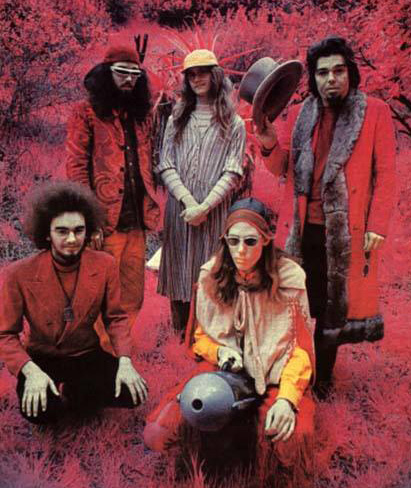
In 1968, according to Immigration Department papers found on a rubbish dump near London 18 years later, Captain Beefheart and his Magic Band arrived at Heathrow Airport. Their inept manager had booked them a series of gigs in the UK, but had overlooked to arrange work visas. As a deeply eccentric, highly individual group who had previously only played the West Coast of the US, to say they stood out like a sore thumb in drab, late 1960s England, would be an understatement. According to the Immigration Department papers, “the group arrived together and presented a very strange appearance, being attired in clothing ranging from ‘jeans’ to purple trousers with shirts of various hues, and wearing headgear varying from conical witches hats to a brilliant yellow safety helmet of the type worn by construction workers….
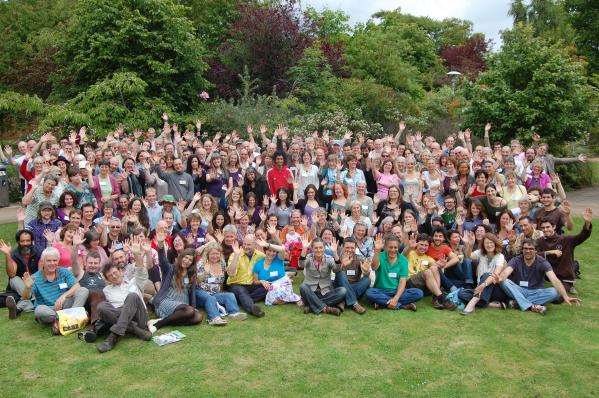
We had a great few days at Hope University in Liverpool. This will not be an attempt at a complete document of that event, you will find the most comprehensive record over at the Transition Network’s conference feed. What I am going to share, with links to some of the key pieces of media from that feed, is some of the notes of my reflections at the end of the conference. As the event drew to a close, I went around and asked people for their brief reflections on what they saw as the character unique to this conference in comparison to others. Three words came up again and again, deepening, focus and maturity.
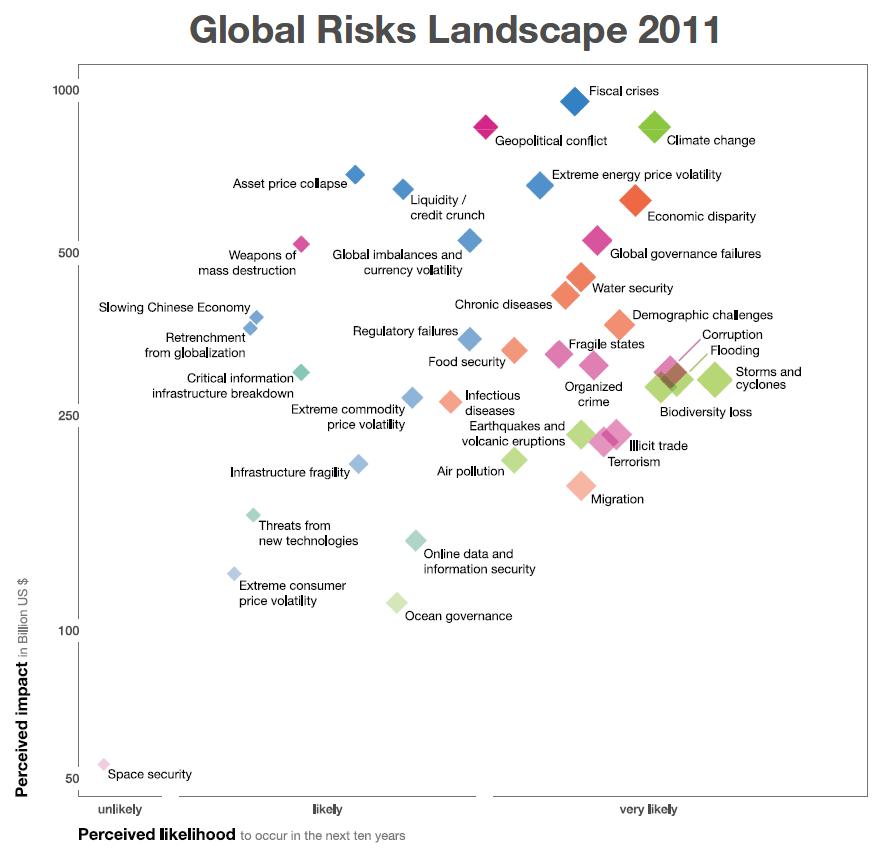
I was reading through the Executive Summary of the World Economic Forum’s Global Risks 2011 this afternoon (as you do) and the chart on page 3 (see above) caught my eye (click on it to enlarge it). In it, the authors set out all the risks they see in the world on a matrix which positions the various risks by their perceived impact on the global economy and by the perceived likelihood of their happening. What you might expect to be at the top, given recent media reports, would be the threat of terrorism or perhaps some hideous computer virus that knocks out nuclear power station. But no. There at the top, leading the pack, are climate change, ‘extreme energy price volatility’ and fiscal crises.
How might our response to peak oil and climate change look more like a party than a protest march? This site explores the emerging transition model in its many manifestations
Read more»