25 Apr 2013
Fantastic new animation: ‘Carbon Omissions: how the UK outsourced its carbon footprint’
Here’s a wonderful new video from Carbon Omissions which uses animation to beautifully make a very important point:
Transition Culture has moved
I no longer blog on this site. You can now find me, my general blog, and details of my books, on my new website.
Come find me at robhopkins.net
Showing results 6 - 10 of 243 for the category: Economics.
Here’s a wonderful new video from Carbon Omissions which uses animation to beautifully make a very important point:
In the last of this series of short videos about the Totnes & District Local Economic Blueprint, David Seymour of Bridgetown Stores in Totnes discusses its implications for the local economy.
Lynette Sinclair runs Tideford Organic Foods on the Industrial Estate in town, and last week I visited her to ask for her thoughts on the Totnes & District Local Economic Blueprint. Here’s what she had to say:
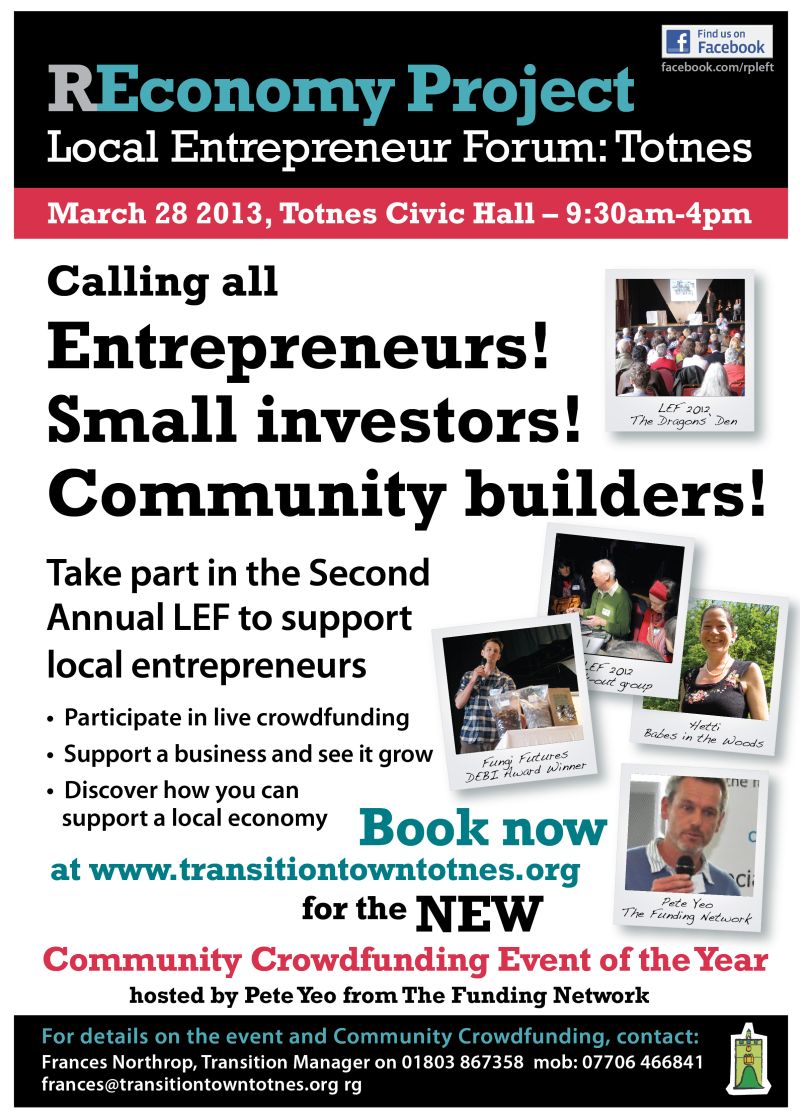
You’ll have seen ‘Dragons Den’ on the TV. Five successful entrepreneurs sit in a row, each with a pile of cash in front of them, and one after another people come in front of them to pitch their business ideas to either be humiliated, ridiculed or fought over as the Dragons seek to outdo each other for the best ideas that come through the door. As with so much in our culture, it’s about competition, the strong surviving, the weak being the laughing stock in clips on YouTube in perpetuity.
Last Friday I had a taste of a very different kind of Dragon’s Den, one that is still giving me goosebumps when I think about it, and about the potential I saw there. Last Friday was the second Totnes Local Entrepreneurs Forum, organised by Transition Town Totnes and the REconomy Project, and it was quite stunning. Here is a short film I made about the day:
South Hams District Council took an active role in the creation of the Totnes & District Local Economic Blueprint, so I sat down with Richard Sheard, Chief Executive Officer at SHDC and began by asking him why he thought the Blueprint matters.
You can download the Blueprint here, and see the first review of it here. Have a good Easter.