I thought I would take the opportunity this morning to rave enthusiastically about Transition training. A few years ago Naresh Giangrande and Sophy Banks designed Transition Training as a two-day total immersion in the first stages of this evolving process. Since the first course in Totnes in October 2007, 106 training courses worldwide have been organised by Transition Training, with local organisers, and presented by members of a dedicated team of 16 UK trainers to over 2,500 participants. Courses have been run throughout the UK, as well as in Eire, Sweden, Brazil, Portugal, Italy, Germany and Flanders. Dozens more are being organised and run by local organizing hubs in the US, Canada, Australia, New Zealand, Europe, parts of South America, and Asia, led by a team of multilingual trainers. Here is a recently made short film about it, the first of three I want to share with you:
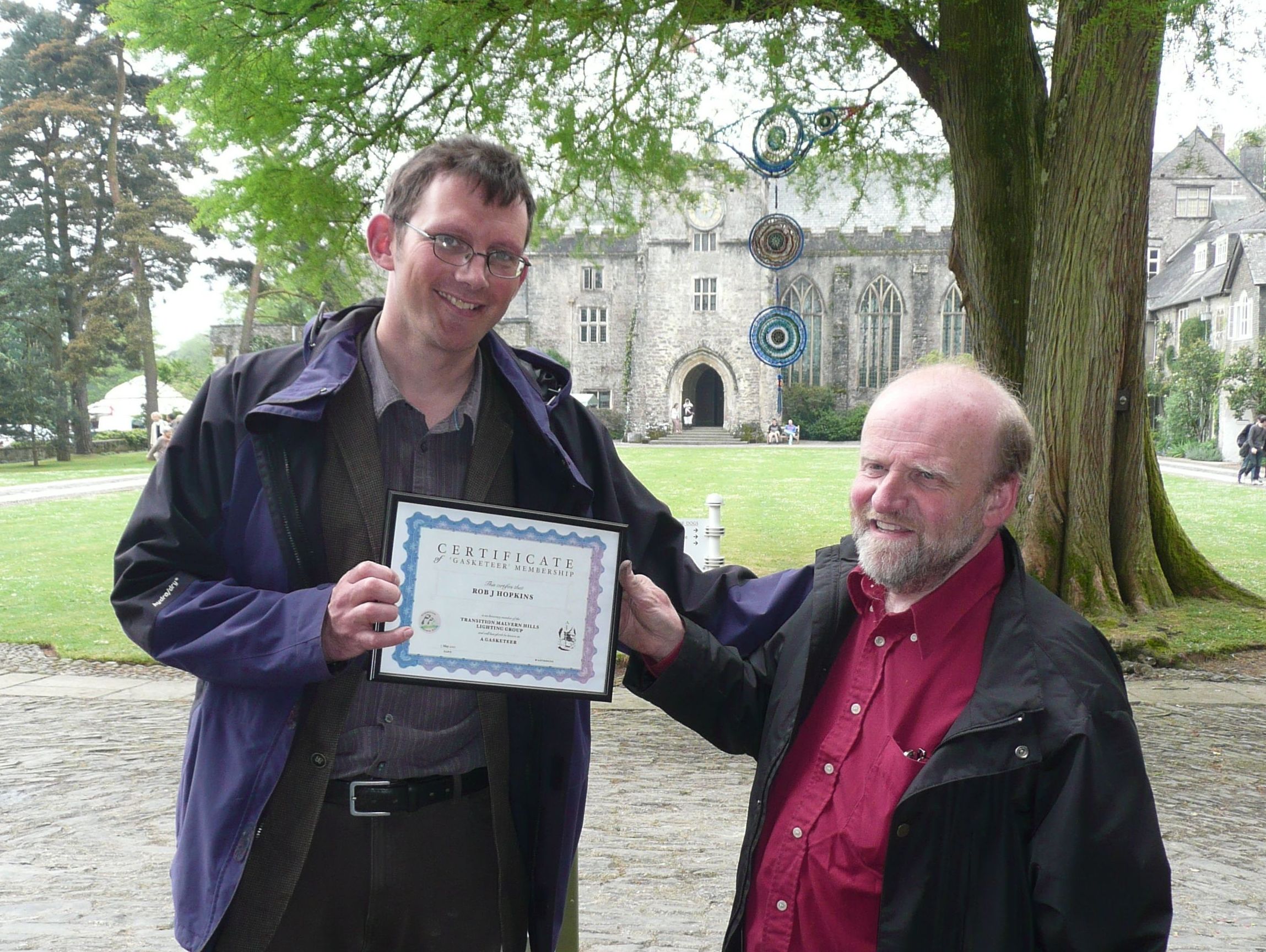
Receiving my certificate from Brian Harper, one of three Gasketeers who travelled to the Tagore Festival...
On Saturday I did a talk at the Tagore Festival which I hope to get a film of up soon. Instead of using powerpoint, I told the story of Transition using different objects which different initiatives had sent me. It went really well, and was a really enjoyable way of doing it. One of the most substantial ‘props’ was a fully functioning Victorian gas lamp which the Malvern Gasketeers had brought all the way from Malvern that morning. My thinking had been that the crescendo of my talk would be to invite them onstage and that they would light the lamp for all to see. However, while setting up we were told that in order to light it we would have needed a licence from the local Council, so it remained unlit, albeit rather beautiful nonetheless.
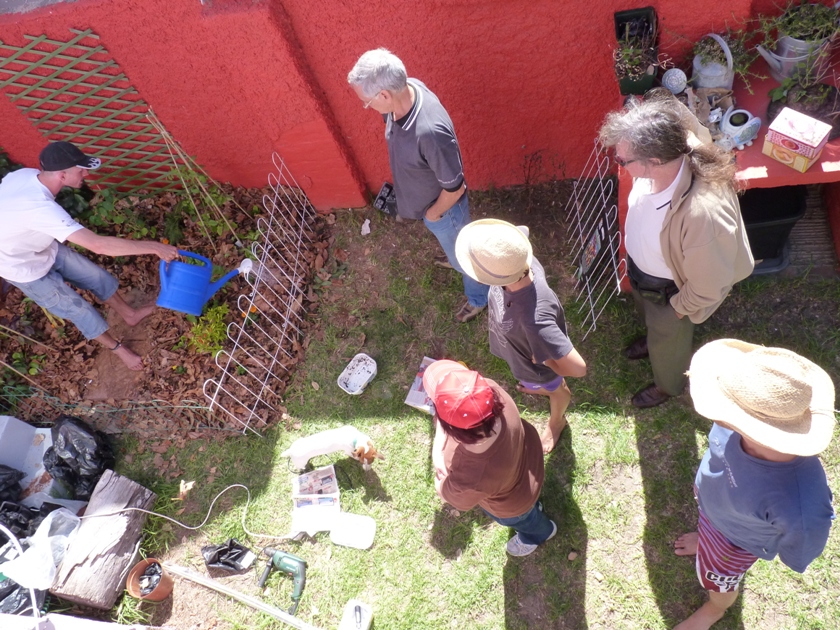
Nelson Mandela Bay Transition Network's ‘introduction to food gardening workshop’
It’s time to share news of all those wonderful Transition activities that you busy Transitioners have been up to this past month… The first alert – in case you haven’t already heard – is to tell you that the Transition Network is now on Facebook…have a look! Starting the rounds down in Australia, Transition Town Triangle Plus and Clean Energy for Eternity recently held a meeting to set out a ground breaking plan developed by Beyond Zero Emissions to move Australia’s energy systems on to renewable technologies in just 10 years… you can do it!
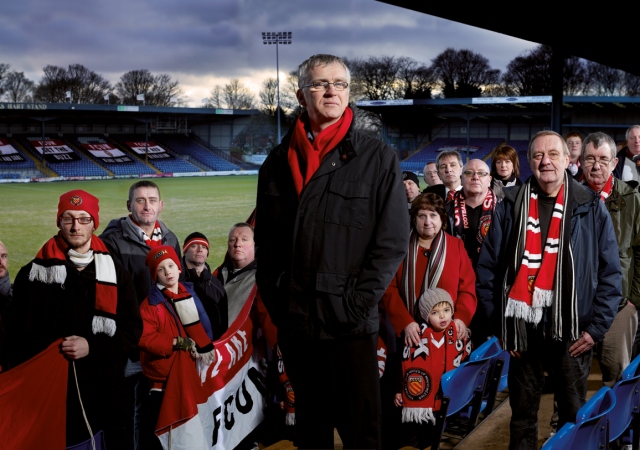
FC United is a supporter-owned football club in Manchester, formed by Manchester United fans opposed to the Glazers buyout of the club. They play in the Northern Premier League and aim to raise £1.5 million for a new ground, and have already raised £700,000, in part through a very well supported share launch. Might a similar model also enable the rapid acceleration of Transition at the community level?
Here is a last minute addition to the ingredients for the forthcoming ‘Transition Companion’. It is especially timely as OVESCO in Lewes’s share option has managed to raise £286, 600 is only £20,000 short of its target … if you live in an around Lewes, get your shares before 27th May!!
Money isn’t a neutral thing. The decisions we make with our investment choices either prop up and reinforce an economic model rooted in a past of cheap energy prices and climate irresponsibility, or they can help to bring forth a new, revitalised and more appropriate way of doing things.
How might our response to peak oil and climate change look more like a party than a protest march? This site explores the emerging transition model in its many manifestations
Read more»