One of the things with climate change as an issue is that when you’re trying to work out what your position is on climate change, there is a scientific consensus and there’s a body of research there – there’s certain criteria you can use when you come to it to work out if this is valid or not. In terms of economics it’s a grey area, in that there’s so much opinion – so for those of us who are coming through the work that you’ve been doing to trying to get our heads around what’s happening on a global scale, what should be the criteria be, do you think, that we should use when looking at different people’s takes on the economy, as to whether they’re valid or not? What was the criteria that you used when researching on the book?
That’s an interesting question; that’s a very good question.
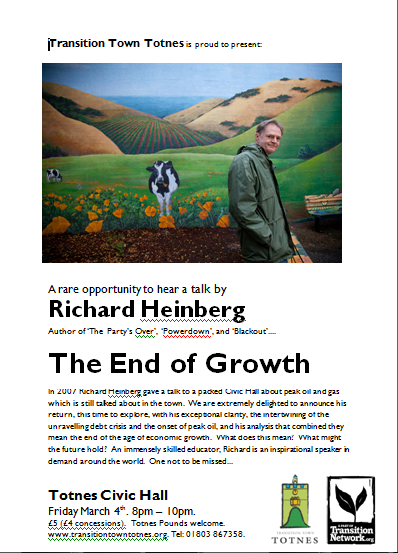
On Richard Heinberg’s recent visit to Totnes, which included a talk on ‘The End of Growth‘, myself, Ben Brangwyn of Transition Network (BB) and Frances Northrop of Transition Town Totnes (FN) did an interview with Richard. Part 2 will appear here tomorrow….
Welcome to Totnes, lovely to have you here again! The first question is: your new book is about economics and the book before was looking at coal….but in terms of the peak oil question that underpinned your previous books, what’s your assessment of where we are now? Is it still as much a part of your overall analysis as it was….?
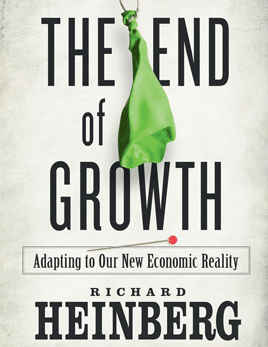
Oh yes, very much so. The new book, The End of Growth makes the case that world economic growth is effectively at an end, both for reasons internal to the world financial monetary system and also for reasons external to the world financial monetary system and the primary factor outside the monetary system is oil.
A week ago today, Richard Heinberg gave a stunning talk in Totnes on ‘The End of Growth’. Thanks to our dear friends at nuproject, I can now unveil the film of his talk. Enjoy… .
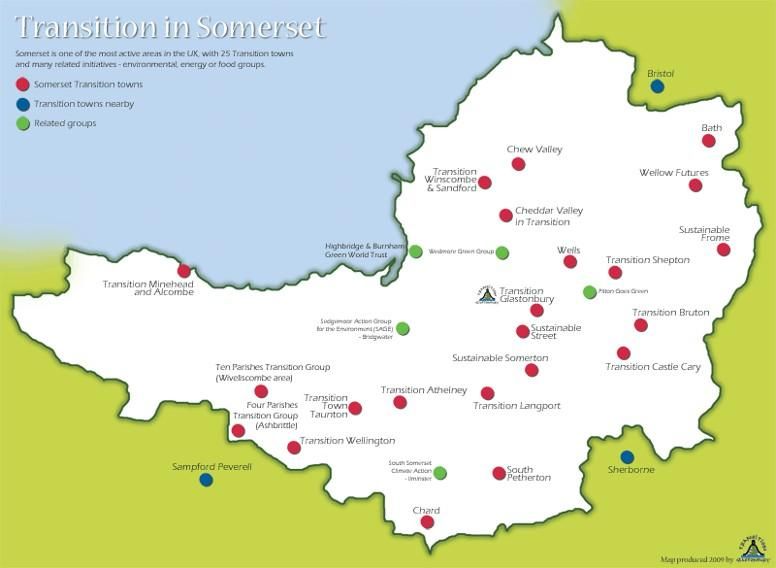
You win some, you lose some. In July 2008, Somerset County Council, then a Liberal Democrat-controlled council, passed a resolution supporting its local Transition initiatives. It was much lauded as a visionary piece of policy-making, a council noting the vibrant activity of Transition groups within the county and deciding to honour that and to begin seriously to explore with them the potential overlaps and interfaces between those two ‘tiers’ in the community. However, it has become clear that what started so boldly and with such great promise has since fallen away. In the spirit of learning from such reversals, this piece explores what we can learn from recent developments in Somerset, and also what we might draw from them in relation to the government’s current ‘localism’ agenda.
I wrote a while ago about Transition Finsbury Park‘s fantastic ‘Confronting Change’ event at the South Bank Centre just before Christmas. Well, thanks to the fine efforts of Miguel Faliero, Simon Maggs, Dan Roberts and the TFP team, the films of the event are now available for your delectation. Here they are, in order of appearance, Polly Higgins, Michael Meacher MP and then myself. The Q & A that followed can be viewed here.
How might our response to peak oil and climate change look more like a party than a protest march? This site explores the emerging transition model in its many manifestations
Read more»
 One of the things with climate change as an issue is that when you’re trying to work out what your position is on climate change, there is a scientific consensus and there’s a body of research there – there’s certain criteria you can use when you come to it to work out if this is valid or not. In terms of economics it’s a grey area, in that there’s so much opinion – so for those of us who are coming through the work that you’ve been doing to trying to get our heads around what’s happening on a global scale, what should be the criteria be, do you think, that we should use when looking at different people’s takes on the economy, as to whether they’re valid or not? What was the criteria that you used when researching on the book?