Transition Culture has moved
I no longer blog on this site. You can now find me, my general blog, and details of my books, on my new website.
Come find me at robhopkins.net
Monthly archive for April 2010
Showing results 16 - 20 of 21 for the month of April, 2010.
8 Apr 2010
 From time to time I hear about people doing Book Clubs based around the Transition Handbook. Thankfully, and entirely in a self-organising “wouldn’t-it-be-great-if-there-was-a-study-guide” kind of way, Joann Kerr, Susan Gregory, and Leo Brodie of Sustainable NE Seattle (the 19th officially-recognized Transition Initiative in the United States), decided to take matters into their own hands and create one. Rather wonderful it is too, packed with activities and exercises to do with a group of people, it is quite special to think that my humble lil’ ole Transition Handbook would enthuse people sufficiently to create such a great resource. Download it here, take it, use it, let them know how it went….
Read more»
7 Apr 2010
 With the recent exoneration of Phil Jones in the UEA ‘ClimateGate’ kerfuffle, the key lesson emerging from the whole thing is not that the science of climate change is somehow profoundly flawed, but rather that scientists are flawed human beings rather like the rest of us, subject to pomposity, ego, vanity, ill-temper and rudeness. The world of science and academia doesn’t always function like the ego-free collective pursuit of knowledge it is meant to, it can be obstructed by those beligerently trying to boost their reputations and funding streams. ‘Solar’ (the first novel I’ve read for a while) is a superbly executed journey through the world of one (fictitious) eminent climate scientist, warts and all. It is compelling, gripping, hilarious and informative, and definitely well worth the read.
Read more»
6 Apr 2010
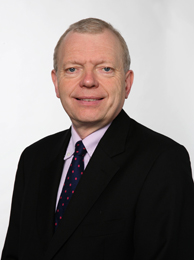 After all the excitement over the last couple of weeks as to whether or not DECC are finally starting to ‘get’ peak oil, following the ‘summit’ that I attended and wrote a detailed account of, initial indicators are that perhaps, erm, no they aren’t. The most recent ODAC (Oil Depletion Analysis Centre) newsletter (essential reading) quotes Lord Hunt (see left), the Energy Minister who dropped in for the last 30 minutes of the meeting, as telling the International Energy Forum in Cancun, “we need a shared understanding of what triggered the volatility of 2008 and 2009. We need the analysis to make sure we do not face the same energy price volatility again.” Two excellent pieces of analysis that explore just those issues were in fact presented at the meeting, the UKERC report, and the Peak Oil Task Force report, but given that he just attended for the last 30 minutes, they passed him by. Are we back at square one then?
Read more»
6 Apr 2010
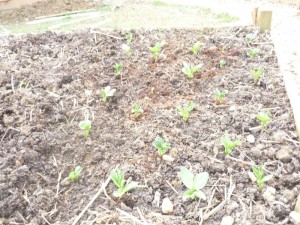
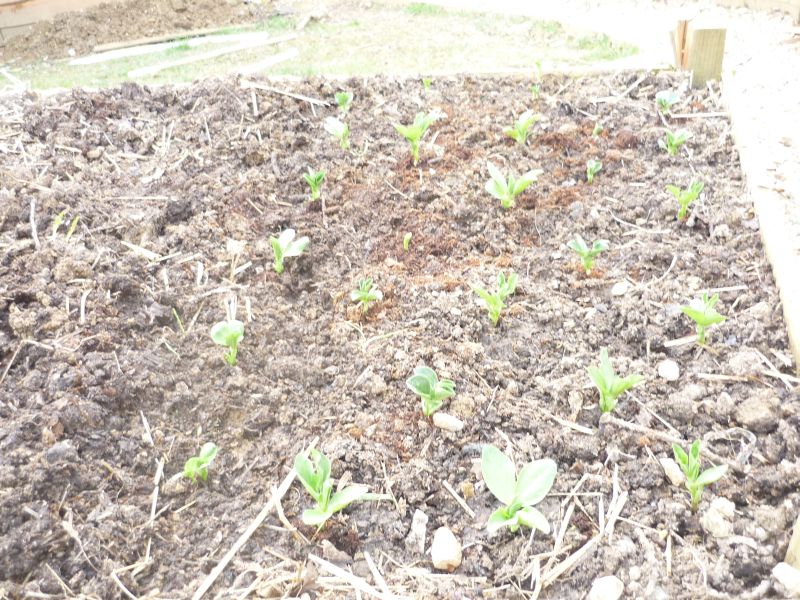
Broad beans emerging from the soil in the garden
When I lived in Ireland, I once met an elderly gentleman who told me that he grew up in an old cob house in Limerick which had a huge inglenook fireplace, designed, a la Newgrange, so that on one day in the year, the sunlight came down the chimney and lit up the whole hearth, alerting you to the fact that that was the day to plant your potatoes. I have always taken that as an awe-inspiring example of how, often, ‘simple’ dwellings were often nothing of the sort, but on reflection, its not a very reliable approach, it might be cloudy, you might have the fire lit, or even just be out for the morning. Anyway, I don’t need a precisely oriented chimney to let me know Spring has arrived, it’s all of a sudden underway whether I want it to be or not (and I very much do…).
Read more»
5 Apr 2010
It’s a while ago now, but the great event that was the launch of “Local Food: how to make it happen in your community” has now been immortalised in a rather good film record of the evening. It was hosted by yours truly, but featured talks by Claire Milne (Transition Network), Julie Brown (Growing Communities), Zoe Leventhal (Transition Town Brixton’s Food Group) and permaculture artists Holly Gregson and Richard Houguez, as well as, of course, Tamzin herself. The film was made by Samuel Stonehill to whom many thanks.
Local Food Book Launch, October 2009 from Tamzin Pinkerton on Vimeo.
Read more»
 From time to time I hear about people doing Book Clubs based around the Transition Handbook. Thankfully, and entirely in a self-organising “wouldn’t-it-be-great-if-there-was-a-study-guide” kind of way, Joann Kerr, Susan Gregory, and Leo Brodie of Sustainable NE Seattle (the 19th officially-recognized Transition Initiative in the United States), decided to take matters into their own hands and create one. Rather wonderful it is too, packed with activities and exercises to do with a group of people, it is quite special to think that my humble lil’ ole Transition Handbook would enthuse people sufficiently to create such a great resource. Download it here, take it, use it, let them know how it went….