I am featured in the hallowed pages of New Scientist this week in its Opinion section, under the heading “Rob Hopkins: getting over oil, one town at a time”. The only slight glitch with it is that the otherwise very attentive interviewer misheard my response when she asked when I thought we would see price volatility arising from peak oil. I said “2013”, which she heard as “2030”, thereby placing me alongside Ed Miliband and Malcolm Wicks in terms of making absurd and profoundly optimistic predictions about peak oil. Jeff Rubin would not agree with that… Oh well. Not sure it gives the best picture of what Transition is about, but here it is anyway….
Here’s a great talk by Davie Philip, long-standing master-networker, Transition Ireland Network catalyst and one man catalyst for change, speaking at day two of The New Emergency Conference: Managing Risk and Building Resilience in a Resource Constrained World, held in Dublin last summer by FEASTA. Excellent.
Here is an excellent piece from the Mid-Wales Permaculture Network site, an interview which looks at how Transition initiatives build relationships with other organisations. It is very insightful, and so, with gratitude to Roz Brown and the MWPN, here it is.
Roz Brown in conversation with Dave Prescott of Transition Hay-on-Wye
The need for broad community involvement is frequently recognised by TT groups, and is certainly advocated by the fonder of the movement. But many TTs struggle to identify and work with existing community organisations to forward the process of meeting the global challenges of climate change and peak oil. One TT group in Mid Wales proceeded from the outset to foster this collaboration and work with and through other organistions. In this interview, Dave Prescott tells the story of Transition Hay on Wye.
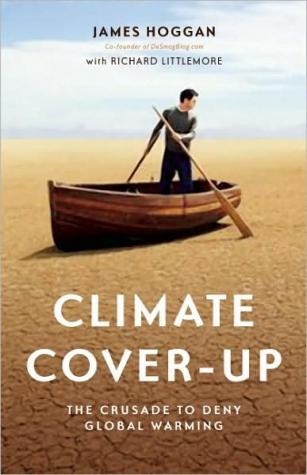
Climate Cover-up: the crusade to deny global warming. James Hoggan with Richard Littlemore. Greystone Books. 2009. 250pp.
This very timely book is essential reading for those bewildered by the recent backlash against climate science. It takes things back to basics, and rather than being an exploration of the climate science itself, it seeks to equip the reader with the tools to be able to distinguish between the sources of climate-related information. If you want to board an aeroplane, but were told by a large group of aeronautical engineers that the plane was 90% certain to crash upon take-off, would you listen to them, or to a small group, comprising a PR consultant, a botanist and a plumber, who presented as evidence an article from Readers Digest magazine? The debate as to whether climate change is happening or not, and the need felt by media organisations to always present ‘both sides’, was over several years ago, yet since just before Copenhagen, contrarianism is back, and is back bigtime. So who are these people? Are they right? And how can we tell the difference?
How might our response to peak oil and climate change look more like a party than a protest march? This site explores the emerging transition model in its many manifestations
Read more»
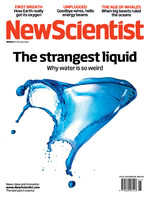 I am featured in the hallowed pages of New Scientist this week in its Opinion section, under the heading “Rob Hopkins: getting over oil, one town at a time”. The only slight glitch with it is that the otherwise very attentive interviewer misheard my response when she asked when I thought we would see price volatility arising from peak oil. I said “2013”, which she heard as “2030”, thereby placing me alongside Ed Miliband and Malcolm Wicks in terms of making absurd and profoundly optimistic predictions about peak oil. Jeff Rubin would not agree with that… Oh well. Not sure it gives the best picture of what Transition is about, but here it is anyway….