7 Dec 2009
To Fly or Not to Fly? Transition Network debates…. what do you think?
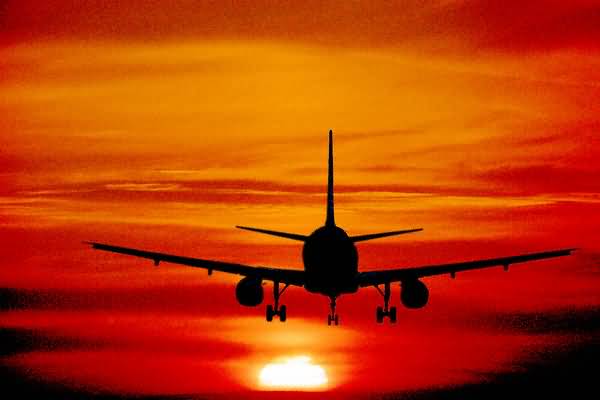 Regular readers will know that I don’t fly, and that if I can’t get somewhere by train, we use other means of communicating. But should the same apply to everyone who works for Transition Network? Should the organisation make a commitment that anyone who represents it similarly seeks alternative ways to get around? This is a very live discussion within the organisation. In order to move it forward, Naresh Giangrande and myself had an email exchange on the subject (see below), and now we’d love to hear your thoughts. Should an organisation committed to modelling Transition also exemplify sustainable transport? As the Copenhagen talks kick off, with many thousands of climate activists flying there, this is a very pertinent question. Have a read of the debate so far, and then have your say too….
Hi Rob;
This is really a difficult one, as we both are fully aware of the necessity to reduce our carbon footprint and that flying has enabled a whole new level of energy and carbon over use. I don’t fly for pleasure or holidays; the only exceptions I make are what George Monbiot calls ‘love miles’ However as far as Transition Network goes should we ban flying? I will lay out the pros and cons as I see them….
Allow flying:
* We can do things that would not be possible without it.
o A good example was our world tour. We couldn’t have done that in a sensible time frame by any other transport option. And our strategy worked! We enabled more training to happen faster and we have stopped the steady stream of people from abroad who came to the UK to do our training.
* It makes us more effective, we can do things in less time.
* It enables face to face meetings which maybe have unquantifiable benefits over and above video conferencing or other forms of communication.
* It forces us to live in the world as it is facing the myriad, often bad, choices that everyone has in everything we do. This in turn gives us an opportunity to face ourselves and the choices we make (while we still have choice) and live with the moral consequences thereof.
* Allow the field to self organise. The banning route would lead to hierarchical control a bad precedent and in a almost paradoxical way leave us open to not walking our talk.
* High carbon
* Leaves us open to we are not walking our talk finger pointing.
Ban flying:
* Lowers our carbon footprint
* We walk our talk, leading by example.
* It stimulates us, and those we work with, to be more creative and or cutting edge in our use of technology such as webinars or video conferencing.
* Take choice out of our hands a big brother approach – David Holmgren calls this the brown tech path.
* Hinders our efforts in ability to have face to face meetings and makes us less effective in the ways listed above in allow flying.
Where this leaves me is that to be a truly alive organisation we need to be living Transition, and that means we- all of us- having to face making the sorts of (often) least bad choices in living everyday life. I would hope we all have the awareness and understanding that this is what ‘living Transition’ means; at least while we still have choice. When we no longer have a choice then Transition turns into something else.
I personally think that there are times you should go somewhere and speak even if it means flying, as you can be very inspirational (as it is having a deeply held belief- as you do- that you don’t fly) but that’s only my opinion and any case I can see the pros and cons. As Joanna Macy says, “That’s how it goes in the Great Turning!”
Naresh
*******************************************
Dear Naresh,
Thanks for your thoughtful opening to this discussion. Your arguments, many of which I agree with, seem to me to boil down to arguing that of course we ought not fly, but for Transition Network to say that no-one who represents it should ever fly is a draconian removal of free choice, and that there are times when it is the most effective thing to do. I would seek to disagree with that (this wouldn’t be much of a debate if I didn’t!), and here’s why.
I haven’t flown since I formally decided to give it up 3 years, 1 month and 20 days ago, having resolved, mid-‘An Inconvenient Truth’, that I just couldn’t do it anymore. I don’t rule it out for life and death situations, but in all other circumstances, that’s it. At least twice a week I get requests to travel to different parts of the world to teach, give talks, meet Transition groups. Any that would necessitate plane travel are politely told that I don’t fly, but we would be delighted to set up some sort of video link, or to use the technology we have now. Of course, as you say, it’s not quite the same quality of experience as my being there in person, but it does, for me, have the strong advantage of being low carbon, replicable, far less time consuming than flying (given that travelling by train taking longer is a reason you give for flying), and it sends a powerful message as well as setting an example.
I clearly don’t try in any sense to fool myself that my giving up flying is going to reverse climate change. I don’t think as I cycle to work or as I stand on Cologne train station that by doing so somehow some miraculous process is taking place, ice sheets magically refreezing and glaciers expanding. For me, the question about not flying is not so much one of thinking that by giving up flying I am having a big impact on the world. Rather it is underpinned by Vandana Shiva’s thought that “these systems exist because we give them our support, and if we withdraw that support they can no longer function”. My not flying makes little difference, but Ryan Air no longer existing would make some difference. It’s the bit I can do. Withdrawal of support is a powerful tool the impact of which we often underestimate.
Recently I was a finalist in the CurryStone Design prize (see below), and they initially wanted me to go to Kentucky for the award ceremony. When I said I didn’t fly, they went off and thought about it, and came back saying that all the finalists would now be presenting by videolink. That meant 3 peoples worth of CO2 saved, enough for 3 people living within their carbon allowance for a year as well as, I got the impression, quite a strong learning experience for the organisation (plus we didn’t actually win!).
I am writing this on my way home from a meeting of European Ashoka Fellows in Austria, I travelled there and back by train, the only person who did. Everyone attending had been told in advance about this mad bloke who was travelling there by train from England, and it was the subject of a lot of conversation, with lots of people really admiring the stance.
The key point here, it seems to me, is that what Transition is about, at its core, is preparing, positively and imaginatively, as well as with a considerable sense of urgency, for a world beyond fossil fuel dependency. Therefore, it feels to me that we need to be modelling, as best we can, that organisational infrastructure now. As Heinberg puts it, the sooner we start living as though we were free from oil dependency, the easier the Transition will be. That, for me, is why not flying sets an important example. Of course, as you say, our daily lives are full of choices, and is often a process of seeking the ‘least bad’ option, but flying is a real biggie, and I think that is a key point here.
We can compromise on not buying local food, take the odd unnecessary car journey, leave lights on, have baths, but one return flight to the US wipes out all the good we may have done elsewhere in our lives, emitting carbon equivalent to 2 year’s carbon allowance in terms of what we should be emitting. This idea of striving to live as though we were already there feels like an important one to me, and that we get ahead of the curve in terms of thinking and modelling how an organisation might work which has an international reach but in which no-one flies. I don’t know of another organisation that does that, but it feels like a vitally important thing to model. Surely your argument that everyone ought to be able to do what feels like the right thing to them, and that we ought not intervene, is a bit like corporations arguing at Copenhagen for voluntary cuts in emissions?
Of course, were we to decide collectively that no-one representing the Network should ever fly, we would need to wear that with pride. If a tree falls in a forest and nobody sees it, it may just as well have not bothered. In the same way, if I spent hours on trains to Austria and back and don’t tell people about it, it has a fraction of the impact. I heard from several people who saw the talk I did by DVD at the IGF conference in Washington who told me afterwards that they had given up flying as a result. If the Network decides collectively to have a no flying policy, it should be writ bold and large that so concerned are we about climate change, and so determined to start modelling post-oil practices today, that we have collectively decided not to fly, and how it has improved our quality of life as an organisation. We would be like the organisational equivalent of The Man at Seat 61, our experience of how to function effectively without flying would be a first, and would be very inspiring.
I find myself increasingly disillusioned by the army of climate experts and sustainability advisers who are continually flying from conference to conference. Surely Transition Network should be modelling a different approach, if for no other reason than because nobody else is? I feel we need to set an example. Saying “we think in principle that flying isn’t great, but everyone should be able to decide on a case by case basis” is reminiscent of lots of corporate green wish lists, voluntary green commitments, ‘carbon friendly’ type greenwash. It can be used to cover a multitude of sins, and it hardly represents the best practice that Transition Network aspires to. Surely we can do better than that? You argue that such an approach ‘forces us to live in the world as it is’, but to me that feels like a cop-out. We all live in the world as it is on a daily basis, but that ought not be an excuse for not leading by example and walking our talk.
What I am suggesting isn’t a ban, rather it is that those who currently represent Transition Network, whether the core organisation, the Training and/or Consulting arm, or whatever, decide collectively that we need to lead by example. You wrote that “I would hope we all have the awareness and understanding that this is what ‘living Transition’ means; at least while we still have choice. When we no longer have a choice then Transition turns into something else”. I disagree. It is the setting of an inspiring example now while we still do have a choice that is where the leading by example, the breaking new and innovative ground happens. We have a position of considerable thought leadership at this stage, and, I feel, a duty to be bold and deliberate. That is, after all, why Transition has generated the respect it has so far. Of course your Training Tour was great, and set up a great infrastructure, but had we decided to try and do such things without flying, might we have been able to apply some innovative creative design and resilience thinking to the question, and come up with something actually more innovative, replicable and appropriate than the flying around the world model.
If we take this decision, it needs to be writ large, and we need to discuss how else we got places. It needs to be a central aspect of Transition Network, one we are all capable to wear with pride. Having already dipped my toes in the life-after-flying pool, I can confidently say “come on in, the water’s lovely!”
Rob
***************************************
After this exchange, Naresh got in touch to say that he pretty much agreed with the points I had made, and that it would be good to throw it open for wider debate. So, what do you think? Would a decision to no longer fly make Transition Network naive, ineffectual, less effective, more isolated, or alternatively, more effective, more inspirational and enable it to do some powerful walking of its talk?
Paul Hendriksen
8 Dec 11:49am
Hi Ann and all,
A final word from my side as well. Of course you are absolutely correct that the criteria are principally meant as guidelines. And maybe that’s where the criteria-apple and the no-flying-pear actually do come together. In stead of a ‘no-brainer’ a no-flying policy should be an incentive to concious thoughts and deeds. As a matter of fact, by ‘hindering’ ourselves by not flying, we are constantly challenged to come up with creative alternatives. No brain-deadiness there as far as I can tell.
Anyway, enjoy your gardening! 🙂
Jon Brooke
8 Dec 12:05pm
Rob, you’re right not to fly. The Transition idea is simple enough to be presented in a book or on a website. Nobody NEEDS to fly anywhere in the name of the Transition Movement. But also, they shouldn’t really NEED to be told that, so don’t ban it as that takes away personal responsibility.
Ann Lamot
8 Dec 12:44pm
Arrggh, can’t help myself, this is just too important.
JTM,
As a result of working with Transition, I have changed my life dramatically. I don’t fly, not for work or love. This is because the transition ethos has had that effect on me, by allowing me to come to my own decision. Being the stroppy cow I am, if I would have been guild tripped or forced into this decision, I would not now be working my socks off to bring this transition forward. And there are many more stroppy people out there like me, who bristle at being told what to do. For them and everybody else, transition needs to retain it’s unique edge of empowerment,trust , compassion, gratitude, inclusion.
Transition is different from most other environmental movements that have gone before, because it works on a different level; it uses ways that have not been tried before on this scale, and shows that it works!
We are trying to change the current paradigm here, we cannot now stoop to use methods from the old one, just because others do so: I quote your bit:
“Any responsible organisation has a raft of policies which protect and codify its purpose, its reputation and its staff.”
The day the Network decides we need this is the day transition as we know it dies and something amorphous, mutated and slimy takes its place.
You call me disingenuous? Would you please let me in on what my secret motives may be? Radical, yes, insincere, never! I can so hear a middleaged belligerent male here : “Come, come, you silly woman, don’t you know how the world works? Tsk, tsk!”
As for delivering the training via video conferencing methods or whatever, I’m so up for that! It’s knackering work and having to travel all over the shop makes it a lot worse. The best training I ever facillitated was right here, in Wales, and I could tuck the kids in and sleep in my own bed at night. Wonderful!
Patrick,
As a trainer, I work for the Network, but I would not call myself an employee. I feel I have a lot more freedom than that term implies. And yes, wouldn’t it be wonderful if the network was set up as a co-operative, something to aspire too?
And I thought about that collective decision making thing too, but then for it to be truly collective and democratic, we’d have to go through the whole process each time someone new joined the pool, so that their opinions would also get equal value. We have to think about those who come after, how would we do this?
Better to make the ethos strong and attractive, so no flying would be the decision people naturally came to and so I agree with Paul as well.
Beam me up, Scotty!
JTM
8 Dec 1:13pm
Ann:
Disingenuous because you know full well that the Transition Network ltd is not the same as the transition network or movement and it is TNltd (A charity with an self selected board of trustees I think) that employs staff and secures funding for particular projects that support the network. To conflate the two is confusing and misleading. I, for example, feel part of the transition network, but I’ve got no particular relationship with TNltd (though I’m very glad of the work it does).
I don’t know how the work of the training pool is organised but I’m guessing that you are either contracted to TNltd in some way or are perhaps part of an autonomous trainers co-op which is in itself contracted to TN… I just don’t know (is it possible to find out?). But to try to suggest that TNltd isn’t bound by the same employment laws, have the same responsibilities to staff, or the same concerns about its identity and reputation as any other organisation is utter rubbish and as Patrick point out, because it isn’t a co-op, it is already and necessarily top down (even if it would rather not be).
Personally I think TNltd should be a co-op, but it isn’t up to me, it’s up to the Trustees. I’ve only briefly worked outside the co-operative movement and, like you, I felt very unhappy about being told what to do and having no influence over decisions that effected me.
steph bradley
8 Dec 2:04pm
Hi Everyone,
Thought I’d add in my piece as an employeee of TN ltd – I gave up flying last year – (which means I leave behind my house and the people & the life I had in Brazil where I lived for 15 years,I cried when I arrived there on my last trip, and I cried when I left 3 weeks later, & only knew later that it was because I wasn’t going to go there anymore) and not because anyone told me to – but because when I had understood fully what the transition movement was about there was only one thing that felt right to do and that was to walk my talk. And it feels great – in fact now – much as though I have always loved train travel (for that little piece of me time between business) I realise that something much more precious happens when you take the time it really takes to arrive somewhere.
I reccommend slow travel to everyone and will be off walking around England to try it out next year for 6 months to co-create & collect Transition Tales – anyone up for joining in – and/or starting a similar walk around Scotland, and Wales do get in touch. Personally I think it is often by seeing how much fun others are having doing it another way that people are inspired to do things differently – so the more of us who talk about the fact that we don’t fly – and love it – and share what we do instead, the more will want to join in.
On love miles I do think that each of us needs time to find the answers to that difficult decision within ourselves and will do our letting go & grieving in the time it takes and that there will be a time of transition that will vary in length for each one of us.
I always feel very good when I tell people that don’t know about transition that Rob doesn’t fly – I’d love to be able to quote others too – so thanks to those who have said they don’t!
Linda
8 Dec 3:36pm
I work for Transition Network (Ltd) 2 days a week. What Transition Network is and what it does is set out in “WHO WE ARE AND WHAT WE DO” https://www.transitionculture.org/2009/02/05/transition-networks-who-we-are-and-what-we-do-document-available/.
I personally DONT and WONT fly. I don’t need to be told to do this. I DONT FLY because I CHOOSE not to. Strictly speaking I suspect it would be illegal if the Transition Network were to ‘ban’ its employees or contracted staff from flying – but I think its good that we’re encouraged to question and make decisions for ourselves. Although the Transition Network employs me, it doesn’t own me, treat me like a robot or like a child.
There is also not an obvious hierarchical management structure – more of a self-organising symbiotic one where the Trustees and staff all seem to recognise that different roles are vital. I personally feel that those involved in TN either in voluntary or paid roles are fairly reflective of the wider Movement. I was part of a Transition Town first and responded to an advert for my post on Rob’s Blog.
I think Transition Network (Ltd) works a bit like a balloon seller… quite good at holding the strings and gathering balloons (not so good at noticing when some of the balloons get a bit tangled)
When you’re given a balloon, no-one asks for the string, but it is kinda helpful….
JTM
8 Dec 5:03pm
Thanks Linda,
Your perspective is helpful. The link too, though it only really describes the function and purpose of TNLtd not the legal or organisational structure – I’m guessing legally a limited company with charitable status, organisationally it seems a bit hazy (as does the formal relationship with the movement). I’m sure that day to day everything is very much non-hierarchical and that everyone knows their role, is respected and considered. But ultimately the trustees have responsibilities and legal obligations and so need to be comfortable with everything that is happening in TNltd (and ultimately have a veto on any proposed staff actions or policies), in this sense the organisation is top-down
But this is way off the point of the thread!!
I think TNltd would be well within its legal rights to say that, on TNltd time, staff and contractors shouldn’t fly. But, as I’ve said earlier and you’ve reiterated, it just shouldn’t be necessary to have this rule because no-one should want to fly…
Which brings us back to the training tour – what was the rationale? Were other methods of dissemination explored?
James R. Martin
8 Dec 6:16pm
hmmm… I’m sitting here now thinking about travel by sea as compared with travel by air. What is the carbon footprint comparision? (I don’t know.) Of course, it depends on many variables, not least being whether the sea-going vessel is a sailboat…. Anyone here know the facts? … And just how long does it take to, say, sail (& cruise ship) from the the UK to the US?
Max
8 Dec 6:44pm
Yes, but…
I used up more than my quota as a young globetrotter. Once I realized the issue I stopped flying; it’s been 9 years, which frequently means 2×24 hour bus/train journeys to come up for 45 minutes of exam in Northern Denmark: Not fun!
I’ve accepted that as part of my membership of Engineers and Builders without Borders, I’d fly if it could help in emergency relief work; that my accumulated knowledge and skills can outweigh the environmental burden… However, 2 months ago I broke my promise…
Waking up to the realization of ‘burn-out’, stress and nervous breakdown, I chose to airlift myself away from the front line of fighting the backwards administrators and local governments etc here in Czech Republic. Unfortunately this has been too large a part of the effect of implementing L.A.21, permaculture farming, natural building and other alternative cutting edge elements to a far from receptive region.
Rather than 3 months at an expensive spa facility, I took 1,5 month among some of the most wonderful supportive friends and colleagues in Oregon and California; learned loads, networked even more, reconnected and rejuvenated. It also contributed loads to my board work in the Natural Building Network. http://www.nbnetwork.org].
I’m now back, plenty inspired to continue my life as idealist, as well as starting more sustainable eco-business ventures.
Yes, according to Rob’s figures above I used “enough for 3 people living within their carbon allowance for a year” +some.
I still believe it was well worth it, and that the past 9 years effect of my lifestyle as example for many makes up for this ‘sin’…
In other words; can’t be 100% fanatic about it…
Cheers,
Max
Tina Clarke
8 Dec 9:39pm
Dear Friends & Colleagues in the Marvelous Work of Transition,
I am so grateful for this conversation. Flying is such an excellent example of the challenges we face in choosing creative descent. I gave up flying–except for a handful of obligatory job and family trips–in 1996. But then I flew twice in the last year–to be trained as a Transition Trainer! Ha.
Rob, your modeling of not flying has encouraged (i.e., increased my courage) to return to my commitment to give up flying. I haven’t decided what I’ll do if my father in Arizona needs me again as he did when he had a five by-pass surgery. But, I’ve done my best to get both parents to move closer to my sisters and I, and gradually they’re coming to understand. Unfortunately, my choice not to fly has brought my primary relationship to the brink (because he chooses to fly between Alaska, Massachusetts and Florida for work and play while I do not want to fly nor to live alone). It is also earning me resentment and criticism from some family members (when I gave up an all-expense-paid trip to Peru because it required flying, and because I proposed that we celebrate the lives of my parents in some other way than flying to Mexico).
Living in a country (the U.S.) with a notoriously inadequate rail system, my pledge not to fly has me spending 30 hours on a train this holiday to go to my family gathering in Minnesota. It is costing me 2.5 times more to take the train, and 3 times the number of hours.
So, I can empathize with Ann’s frustration with the suggestion that those of us teaching Transition take a voluntary pledge to forgo flying. With children, plane travel becomes almost unavoidable if family visits, school schedules and other priorities are at odds with the time it takes for overland travel. In the U.S., driving can sometimes require as much oil as flying — so the question can easily become one of whether ANY long-distance, oil-based travel by plane or vehicle is “the caring thing to do”. Giving up long-distance travel by means of private car or plane is a question that would make nearly all Americans wince.
I don’t see that encouraging Transition trainers and staff to give up flying is forcing morality on us. We are a movement of people who are courageous in asking the tough questions of ourselves. We are each choosing to affiliate with this movement, and in this choosing we are expressing both our INTENTION to do our best to reduce our polluting energy use and we are INVITING OTHERS to review our success in achieving our intentions. No one is imposing, authoritarian style, on us. We have chosen a difficult path. And we are being encouraged and invited to consider what message our actions communicate. And to consider making a pledge to demonstrate our understanding of the responsible, publicly visible role we have chosen.
Perhaps the real question underlying all of this emerged in the comments above: what if we who are teaching Transition were to give our own carbon accounting? And, as we share our stories of personal transition, what if we were to be a community of forgiveness for each other?
I am sad when I think about all the decisions I’ve made that can and do hasten the harm to others and the earth. Perhaps the invitation of Transition is to welcome and support each of us on our path. We are committed to face — to not reject or deny — the parts of the truth that we don’t want to hear (i.e., flying is particularly horrific for our beloved earth and the future of our children). Yet we can, in true Transition style, as Rob and Naresh model, invite the conversation and invite the self-examination.
Perhaps each of us as trainers could voluntarily share our carbon-reduction journey. Perhaps it is these stories — and the strength of our determination to live in new ways — that bring us together.
In this way, each of us has stories and obstacles, and each of us is in a different place. OUR INDIVIDUAL STORIES OF TRANSITION ARE THE BLESSINGS OF BEING IN A DIVERSE MOVEMENT. The key is that all of us who are in positions of responsibility, publicly visible or not, paid or unpaid, consultant or staff, are deeply challenging ourselves and openly sharing our stories of our efforts.
Hopefully with humor, and compassion, for ourselves and others.
Let us celebrate all that we each have achieved in carbon reduction and independence from fossil fuels and dirty energy. Let us empathize with the challenges we each face. And let us also nudge each other to be even more courageous!
* * *
After I got over my resistance to traveling 2100 kilometers in an open-seating train car, I realized that the trip was an opportunity to support TRansition! I could offer Transition Training by Train! I have now scheduled stops along the way to offer TT workshops.
I’m now thinking I should do all my Transition Training by bus, rail and other public transit, scheduling trips weeks in advance to make the most out of every mile. Hmm… Thank you, Transition Movement, for helping me dream bigger, compassionately, and with a sense of mischievous fun.
Tina Clarke,
Massachusetts, USA
Sarah Edwards
8 Dec 10:10pm
I have always admired your commitment, Rob, as the lead of this movement to be “living Transition, having to face making the sorts of (often) least bad choices in living everyday life.” In that spirit our local Transition Initiative has a Make a Committment program where we all decide what commitments we want to make to sustainability and localization. Last January one aspect of my personal commitment was not to travel anywhere I could not get to by car with less than a day (there really aren’t any trains around where I live)I feel pleased to have kept that commitment and will continue it into the next year.
Your point about choice is a very good one. We find that having people choose the commitments they are willing to make without judgement from others as to what is the “best” commitment is producing a positive response. That is, as you say, a luxury we in my own community and we in our wider Transition Community still have.
Annie Leymarie
8 Dec 10:43pm
According to a Tibetan saying, we need to “make haste slowly”. In other words, slow down as fast as we can!
Mandy
9 Dec 12:35am
Firstly I would like to say that personally I hate flying and love trains. If I never got on a plane again it would be too soon. I confess to taking 2 shorthaul flights in the last 7 years (not in the service of the Transition Network though).
However I understand Naresh’s point of view as I remember many of the early trainings where several people would have flown in on long haul flights just to do the training. It was a pragmatic decision to go out and train people around the globe so that there would be local trainers available instead.
Ann and I had a long, very enjoyable, eventful but ultimately expensive (for the hosts) car / boat/ train / taxi journey to Ireland last summer because we were absolutely determined not to fly there. It was the last time that trainers will go from the UK as the Irish Transition Network now have their own trainers. Job done.
Things have moved on and I agree that perhaps we need to look again at what is really necessary and useful.
Perhaps we could devise a method of paying travel expenses that would reflect the true costs of different types of travel and embody our values.
For example, if we didn’t pay travel expenses for flying, trainers could decide that a particular trip was so important that they would be prepared to pay for the ticket themselves. They could alternatively take the train and have their expenses fully covered, or they could decide to let another trainer do that training.
People could be paid a minimal amount for car travel say 10p a mile – enough to cover fuel for a reasonably efficient car but not much more.
Perhaps bike travel could be re-inbursed at a similar level to pay for bike upkeep and extra organic food for the cyclist……
Theresa
9 Dec 12:49am
Hello from Houston TX. How about this message:
“The founder of Transition Network has made the decision to no longer fly as part of his commitment to addressing Peak Oil and Global Warming. Other Transition trainers have also made this commitment.
The decision to give up flying may prove difficult to some people in the transition movement. The Transition Network encourages all participants to use their own judgement, with the knowledge and encouragement at hand, in making their transitioning choices.”
It’s really the people outside of Transitioning that will get the most from that kind of message.
They might deny Peak Oil or Global Warming, but they would be hard pressed to deny your commitment.
Al Gore caught a lot of (deserved) flack for not having a “Green”house when he could afford to do so. On the other hand, Bush and Cheney are totally off the grid and never mentioned it…
Louise R
9 Dec 9:31am
Hi Rob, contributors,
Sorry I didn’t have time to read all the comments above so apologies if I’m repeating anything.
First, full disclosure, I haven’t flown for 3 years and 6 months. I live in Japan and came here on trains and a boat. My parents visited me once, they came and went on trains and boats, no friends or family have flown to see me in the 2 + years I have been here.
Basically, my view boils down to: policies you set for employees should reflect political policies you would like to see enacted. Meaning, if you think that all governments should be striving for a complete and total ban on aviation (at whatever point in the near future) then perhaps this is a good policy to adopt.
Suggestions for policies I would more likely support for transition / potentially scalable to the whole world.
– Each employee takes a public pledge to keep their personal emissions to a minimum, and insists upon low carbon alternatives in every available opportunity. This means taking a firm position with overseas conferences and other activities, educating such people, being proactive about suggesting alternatives, and preparing yourselves with technology that can bridge the gap. You could even ask employees to take an audit of their current emissions, then ask them to pledge to reduce those emissions year on year. How they do it, however is up to them.
– Using carrots: some companies now give extra holiday time to employees who use sustainable transport to reach their destination, the government has a free bicycle for commuters scheme. Support such carrot based approaches to changing transport behaviour in your community.
– Lobby governments to improve international rail links (and hope governments will lobby those countries where massive improvements could be made, in the same way that governments lobby for trade agreements or shipping lanes that will be useful internationally). Just think how many more people could choose rail for a number of destinations if the rail links on the sections of track from Poland to Beijing, where there are old diesel chuggers, to western European style trains. That would reduce the rail journey from 6-8 days to 3-4?? Wishful thinking maybe but much more worthy than the 3rd runway.
I like the above commentator’s “The Transition Network encourages all participants to use their own judgement, with the knowledge and encouragement at hand, in making their transitioning choices.”
I don’t underestimate the damaging effect of high carbon lifestyles, and flying is a big part of that which is why I’ve made this commitment even though not seeing my sister for 3 years has been very difficult for me. However, I wouldn’t want to be living under a government that banned me from flying to see her, or my parents if they were likely to die sooner than the 11 days it would take me to get back home on a train. I feel that whatever I don’t want to see in government, I’m sure I don’t want to see in other organisations promoting change for the future. Likewise, for example, if you were summoned to see the Saudi government (who are denying climate science at Copenhagen as I type), Rob, I think it would be crazy to stick to a dogmatic idea instead of doing something that effects change with an enormous impact level. I think if you enforce rigid bylaws on your members you are playing into the hands of your opponents, while gaining only minor applause from those within the movement.
The problem with our current lifestyle is so much more systemic and hidden than the headline grabbing aviation issue, but you need to come at this with compassion and without dogma, allow as much freedom as possible within the limits you see as fit for purpose.
Patrick Whitefield
9 Dec 11:04am
Here are some comparisons of energy use, in kWh/100passenger-km, from: David MacKay (2009) Sustainable Energy – without the hot air, UIT Cambridge. (incidentally, a brilliant book, available free on line at http://www.withouthotair.com)
My figures may differ from his by a unit or so as I copied them from a graph.
Electric train, full – 2
Electric high-speed train, full – 4
Coach, full – 6
Diesel high-speed train, full – 9
Car, full – 19
Sea bus, average loading – 22
Catamaran, average loading – 36
Boeing 747, full – 42
Boeing 747, average – 51
Car, 1 person – 81
Ocean liner, full – 103
Ocean liner, average – 122
The global warming potential of the energy used will depend to some extent on the energy source used.
The figures for air travel need to be multiplied by a factor of somewhere between 2 & 3 to account for greenhouse gases other than CO2 which are more potent because they’re released at high altitude. MacKay uses a factor of 2, Kevin Anderson of the Hadley Centre uses 2.7. This would put the figures for the Boeing up to 113 & 138 – ie causing 12 times as much global warming per 100p-km as the least efficient train.
Long-distance sea travel comes off badly because each passenger occupies much more space than the single seat of a plane or train – cabin + a share of all the public rooms – and all of this is made of heavy steel. But it’s still better than flying.
On a different note, some contributors to this thread seem to assume that anyone involved in Transition will automatically not be a flyer. I would have thought so too. But last summer I went to a workshop led by Starhawk for Transition activits. These were all people who’d taken time out of their lives and spent money to be there and some had travelled far. One exercise we did was to form a circle and anyone who felt moved to do so could go into the centre and make a personal statement. People who felt that statement applied to them could move into the centre and join them. I went into the centre and said ‘I don’t fly.’ How many do you think joined me out of the 40 Transition activists in that circle? One.
Steve Atkins
9 Dec 12:39pm
Hi Patrick
Thanks for the transport energy stats. Do the figures include the embodied energy as well?
Reading the result of your question to the Starhawk group made my heart sink.
Best wishes
Steve
charlotte du cann
9 Dec 4:37pm
Dear All,
We just had a Transition Circle based on Transport (circles are personal carbon reduction groups in Transition Norwich, aiming at a 50% cut of the national average). We were all roughly on a par with our carbon footprint as far as car/train/bus travel went. But then two of the group were flying to San Francisco next year. Suddenly there was an awkward discrepancy between us – 1 ton leapt to 10.
Flying makes all the difference.
At The Wave Climate Emergency rally on Saturday the group Seize the Day sang a song called Flying. If you haven’t heard it check it out. In spite of the rally’s fine rhetoric and the presence of 50,000 blue-painted people walking through the capital it was this song that moved me. Because it was based on the very real sacrifice made not to fly by the singer herself and then given in the form of a song to the people. She has a grandmother in America and a sister in Australia.
Don’t take my freedom. Don’t take my wings away.
For Transition to speak directly to the hearts of people where these kinds of decisions are made we need to be seen walking (literally)our talk.
Best wishes,
Charlotte
Josef
9 Dec 10:06pm
I think there should be a policy that whilst being paid to do work for Transition Network Ltd people should not fly.
What they do in their own time they, of course, do on their own terms.
Aside from the fact that travelling by land/ sea is normally MUCH more expensive, for the many people who only get a ludicrous amount of holiday each year time is a real and often deciding issue.
So, together with the no-fly policy I’d strongly encourage TN Ltd to give employees much more holiday that is required by law.
As for the wider debate, its worth remembering that the vast majority of humanity has never flown and never will and so can not “give up” flying.
I commend people taking a pledge to not fly again, but most of them have already flown all over the world – if this is you please think twice before being judgemental about poor families taking a rare package holiday.
I find it odd that Rob says “In relation to why pick on air travel, it is, for me anyway, because it is an area where we can make an impact. In our daily lives, we can have some impact through choices we make, by not flying, by altering our shopping patterns, but in relation to coal, other than signing up with Good Energy or another green energy provider, or engaging in direct action against coal, we can have less influence.”
Sounds to me like switching to a green supplier (I’d recommend Ecotricity over Good Energy myself because they invest more in new green energy than all thet other companies put together) and engaging in direct action against coal would likely have more influence than not flying.
My final point is that we desperately need to create a whole new economic system, starting with a new banking system. i.e. no amount of not-doing stuff will ever get us to where we need to be.
To be the change we want to see we need to CREATE the change we want to see. i.e. design new SYSTEMS (e.g. land ownership/ stewardship/ management systems, money/ banking/ exchange systems, media systems) that make the existing systems obsolete.
kristen
9 Dec 10:41pm
It’s not so much a question of not flying as a question of not travelling long-distance.
When you look at the fuel consumption for a full A380, it amounts to 3 litres per 100 km per passenger. This is comparable to a recent medium car with two people. The trick is : you don’t drive 20,000 km to attend a conference.
After food-miles, we have to think in terms of meeting-miles. And when people say that meetings are more productive when we can attend in person, just imagine how much you could achieve during a teleconference that lasted not just the duration of the meeting it replaces, but also the duration of the trip it made unnecessary.
Just an example : instead of Rob flying to Kentucky and talking 2 hours then socializing a couple more hours, you could have Rob on-demand via videoconference for three straight days! (because that’s how much time it would cost Rob to fly there and back for just a few hours of ‘in person’ presence).
Graham
10 Dec 10:36am
I’m inclined to agree with Stefan. For many of us flying is indeed the most energy intensive activity, and perhaps one of the easiest way to cut substantially per capita emissions, but it doesnt work that way across the board for everyone. We all have different circumstances. I dont see why “not flying” is any more a “no brainer” than giving up the car or, especially, limiting the number of children we have.
Several commentators have said sthg along the lines of “how could a transitioner even think of flying”- surely we could just as easily say “how could a transitioner even think of having more than one child” ?!
If I gave up the van but replaced it with one or two flights to the UK a year I would still have reduced my carbon by more than 50%.
Stefan’s point that many of us have already had the privilege of flying round the world is well made- giving up something you have already done is very different from being denied it in the first place.
Max
10 Dec 10:52am
Aye, Graham!
When do we include ‘Children re-location’ (a.k.a. adoption, foster care etc.) in the transition work?
I’m saddened every time friends have their own child no. 2, in order to fill the satisfaction of the ideal family. Why not obtain this by relieving the local/global injustice at same time, and stopping this insane yeast-cell like growth on the planet? …Is it every week or day we become one million more people?
Sorry, but the issue of flying simply doesn’t compare…
Graham
10 Dec 11:01am
Max:
I propose a policy that TTN employees do not have any more children….while on Transition business.(What they do in their own time is up to them):)
Trugs
11 Dec 12:06am
Excellent quality of debate with good points made on all sides, but all highlighting how difficult many of the choices are that we transitioners choose to make while there is still (relatively cheap)oil around.
Those who have always been “green” and who can reduce their carbon footprint to very low levels get our respect. For many of us, however, transition isn’t easy. It can be a huge psychological and emotional struggle as some of these posts testify. For at alest some of us, few decisions as we move out of the hydrocarbon comfort zone are “no brainers”, especially when it comes to “love miles” or when you are the only member of your (much loved) family who really “gets transition”.
For the smoothest possible transition we need people who don’t currently think about these issues AT ALL to be engaged. Lots of personal stories, lots of examples of doing the right thing (like Rob’s jourrney to Austria), perhaps statements like the one suggested by Theresa above, will help to achieve that.
Lots of encouragement and persuasion to do the right thing, but not please a blanket Transition network “policy” of no fly, any more than a blanket policy of “no children” (if you haven’t already had some, presumably). And let’s, above all, not judge each others’ often painful carbon reduction choices too harshly…
Stephen Watson
13 Dec 9:54pm
I haven’t flown since 2003. I’m 51. I have flown to Paris once, Israel once, Skegness (from Swanton Morley in a 4 seat Cessna in 1974!) and Australia once. I gave up after Oz. My best friend lives in Chicago now. Another childhood friend who lives in Bangkok, but visits his parents in the UK every Xmas recently suggested I visit him. My half brother lives in Australia.
I’m not a well travelled person and I’d love to go to these places. I’d love to see the Great Wall, the Grand Canyon, the Great Barrier Reef but I won’t fly. I can’t afford a cruise ship. I know from seeat61.com that I could cross to USA on a merchant ship for an affordable amount and I may consider that. I can’t afford a Rolls-Royce either. Or a 20 bedroom house. These days a lot of people expect what once would have been the privilege of the extremely weathy as a right: a winter break in Bermuda, a weekend trip to Rome, a two week holiday in the Maldives? Why not, as Seize the Day point out in their superb song mentioned above, “… when it’s cheaper to fly than to park at the airport, what would you do?”. Tha’s not to say either that the wealthy are any more entitled to these than the rest of us.
We have created the story of today’s world where air travel is just part of the backdrop, as normal as shopping at the supermarket or buying a 40″ plasma TV. As Joanne pointed out, once, when people moved to another country they were essentially “gone forever”. Now, it’s a minor inconvenience and no more. Once, the idea of being told that part of your work required you to be in Berlin for 9am to deliver a training program ending at 5pm and be back in the UK office at 9pm for the departmental board meeting would actually have been physically impossible and thus not even considered. Now it may be seen as essential. We have built many parts of our food systems, our relationships, our leisure time and many other things around the availability of accessible, quick, affordable travel to anywhere in the world. It’s like the oil woven into our lives and it’s no wonder so many people don’t want to let go.
My Mum, who is 82, has spent a single day in Boulogne in 1964. The rest of her life has been lived in the UK. She does not feel cheated.
In my view, in another 20 years at most, for the vast majority of the world’s population there will be no more flying (as it is for most of them already and has been all their lives) unless it’s by airship which I believe is the only viable model for future air travel. It’s only us rich people that fret over these choices – such are the stresses of our wealth.
At Green Architecture day here in Brighton a few years ago, a guy talked about rammed earth buildings and said that CO2 emissions from concrete manufacture at roughly double that of aviation. But aviation is the fastest growing source and there is at least something we can do about it. It’s much harder for us to do something about concrete’s CO2 emissions.
Ian said “You also need to consider that the aeroplane is going to fly there anyway, whether you are on it or not. Flying a 747 to Australia with two empty seats becasue TN decided not to fly makes such an infitesimal difference to the total emissions for that particular day, that the agonising over it is pointless.” Well, in that case there’s little point in changing any of our behaviour patterns if X is going to continue anyway because that’s what most people will continue doing. Not a very inspiring way of approaching the redirection of our futures.
I think that the Network should do ground breaking research in finding a superb way of videoconferencing to deliver top notch training and surely with all the electronic wizardry available today it can’t be that hard. High definition, document transfer, interactivity, surely only the physical presence is missing and for all that carbon on the table, it’s surely worth going for.
Max
14 Dec 9:29pm
I don’t fly now, haven’t flown since 2004, I used to fly alot for work, and left the job partly for flying reasons. I didn’t think I could stand up and do talks/articles on peak oil and be taken seriously if I still flew regularly. Credibility is everything.
I travel by train a fair bit but have some doubts over its efficiency.
I am not sure train travel over continental distances is lower energy than flying. Railways require a great deal of maintenance, they use land and TGV type trains use alot more energy than slow trains.
If airlines can make money flying people for much less money than rail I see a signal that air travel uses less resources than rail travel. I have yet to see a good study that considers all the energy costs of a 1000km journey by rail vs air. Planes don’t need a permanent way. For me low impact means less travel by whatever means.
Patrick Whitefield
15 Dec 12:13pm
Max
You assume that there’s a direct relationship between money cost and the amount of resources used. If only there was! The reason why air travel is much cheaper than rail is that a larger proportion of the cost of air travel is in fuel and less in employing people. It’s the very low price we pay for energy that makes air cheap in money terms.
Your point about embodied energy is a good one, but after considering airports, access roads car parks etc don’t assume air comes out far ahead. A railway track is a very economical structure in terms of number of people transported per metre width per hour.
If rail does have a greater embodied energy it pales into insignificance beside the twelve-fold difference between the global warming effect per passenger km of high-speed rail and air. (See my post of 9th Dec.)
Sophia
15 Dec 12:59pm
Hello,
Travelling has been an invalid experience for my personal journey to understanding and appreciating the planet. If there had been an affordable non-flying option I could take that was safe for a lone female, I would have jumped at it. As it happened I flew around the world! To limit my carbon footprint I chose to travel across lands by public transport, only flying over seas.
The point here being; to me, transition is not about telling people what they should or shouldn’t be doing (every action having a reaction…not always the desired one!), but maybe it can help people make the best decisions to suit them.
Ann Lamot
15 Dec 4:01pm
Hi everybody
Just checked out how much it would cost to teach the “Training for Transition” course via video conferencing technology: £47/hour for the use of the equipment, with additional telephone/broadband line costs ( still awaiting quote), so at 15 hours, that’s £705, then double that, ’cause you need these facilities on both ends, that’s £1410, plus venue hire £200-£500, again times two, that’s £1810-£2410, then trainer’s fees £1000, Network fee(based on 24 participants)£240, miscellaneous expenses £100, so that comes to £3150-£3750. For a group of 24 participants, that brings the cost of Training for Transition to £131 – £156 per person minimum.
Any takers?
Annie Leymarie
15 Dec 6:16pm
Hi Patrick – and others
It would be useful to know how full a train is on average – in the UK for a start – to compare a train journey with a journey in a full car…
Max
15 Dec 9:41pm
As part of my Human Ecology studies we once found that it was better for the environment to car pool with 3 people than to take the train in DK to work 45 min. away… granted lots of parameters was absent and we were newbies in LCA, it still made me severely doubt various myths along with the science behind ‘Life Cycle Analysis’.
Even though, then I’d love to see the environmental data on Sir Branson’s ‘fly to space for fun’ (flights for the social ignorati), and as well suggest that we may broaden this discussion to driving of cars, as it seems it’s about to become interwoven:
I just came across a site with the catch title; “It’s time to make the Transition” , advocating a street legal airplane: http://www.terrafugia.com ” a vehicle that uses super-unleaded automobile gas, and that will get about 27.5 miles per gallon flying at 115 miles per hour, which is better mileage than most cars get on the highway right now, and at nearly twice the speed. So from a fuel-economy perspective, it’s actually one of the greenest planes out there. And the Transition is such a light vehicle that the mileage should be quite good on the road. We are expecting between 30 and 40 miles per gallon.”
Hmm….Personally I think I stick to a pony (and an air-powered car, http://mdi.lu/english/cityflowair.php ..charged by solar-voltaics?)
Cheers,
The Perma-Max (Not same as Max with the 14/12 comment)
Louise R
16 Dec 12:16am
@Ann They were charging more than that at training sessions here in Tokyo recently. Why hire the equipment? Why not buy it and rent it out to other people in your local area as a hub facility that both earns money for your group and is free or minimum cost to members…
@Annie A full car is not so terribly bad accross relatively short distances… not sure its got much scope on a journey to Russia, say. A train journey depends on many things, not just occupancy – is it electric / diesel? How fast does it go? If electric, is the electricity in the country its running in 3 quarters nuclear – like France – or 3 quarters coal – like China.
Deirdre Kent
7 Jan 12:11pm
Thanks so much for this debate. Rob you are inspiring and so happy with it! Have just started a group on our ning site above for such a discussion. There is also one on http://www.intersect.ning.com/flightlessbirds. One person can do so much. My husband has 43 grandchildren and 28 great grandchildren and I have 13 grandchildren so our family itself would respond in a number of ways. Then there is the transition group I belong to in Otaki and all those I know round New Zealand. My bridge club, my ukulele group, the folk music friends it goes on. I now dream of a New Zealand conference, (some by skype and other means) of all those who want to discuss this issue. The airline industry is in massive change and the power of consumers is totally underestimated. This group reach tipping point in a couple of years not too soon for me as the nor westerly winds Wellington and regions are experiencing recently are just horrible. Otaki didn’t used to have any significant wind in summer but it is relentless now. Climate change is happening so fast it scares me and as a grandmother I just must do something.
Andy Stokes
20 May 3:16pm
It seems to me that there is an important point that I don’t think has been raised here regarding the argument of comparative costs of air travel and other forms of communication/travel.
The cost of air travel is in fact kept artificially low by means of an effective subsidy (to the tune of £300 PA per person in the UK in 2006 according to this FOtE article http://www.foe.co.uk/resource/press_releases/uk_taxpayers_subsidise_air_10032006.html ).
The low cost of travel by air does not reflect lower use of energy. Aviation fuel does not get VAT or duty paid on it unlike all other forms of fuel, and air-travel is also subsidised because local authorities around the world pay airlines to fly to their cities to increase tourism.
This produces an un-level playing field for transport methods – the artificially low cost of air travel in turn makes alternative forms of travel less attractive, diminishing passenger numbers, which in turn forces fares up (just like supermarkets artificially low prices on basic commodities force up or out of business local corner shops).
The sooner this inequality is addressed, and transport costs reflect real costs, the better for the planet. Why should we be subsidising this extremely damaging transportation method (as an earlier poster pointed out, every tonne of carbon emitted high up in the atmosphere does 2 to 3 times as much damage as 1 delivered at ground level).
I, as a non-flier resent subsidising air travellers who are damaging the environment and using up precious oil and believe we should be imposing punitive taxes on air travel, not subsidising it!
David Lyons
20 May 10:15pm
Andy – I am right behind you on this…. just thinking…could we be doing a class action on this…a letter writing campaign…wear a badge? I have been involved in various actions against air travel in the past..but nothing specifically on air travel subsidy…is there a specific campaign about it?
Dave
Andy Stokes
20 May 10:23pm
I don’t know of any campaign specifically around the issue of fair taxation on aviation fuel – If there isn’t then I think we should definitely start one!
Anyone else know of anything?
Andy Stokes
20 May 10:25pm
PS this article http://www.thebadgeronline.co.uk/guest-blogs/the-national-campaign-against-airport-expansion/ states £9 billion is lost to the exchequer each year because of loss of revenue from tax on aviation fuel.