24 May 2006
An Evening in Peter Harper’s Garden.
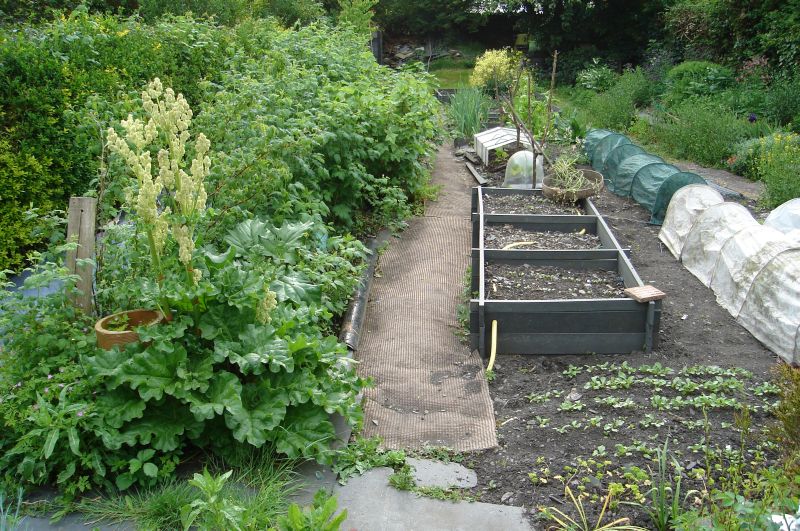 **Peter Harper** has been at the Centre for Alternative Technology for over 15 years as a landscape designer, director of biological research and now as Head of Research and Innovation. He is author of many articles and of the classic “Natural Garden Book”, which I think is now tragically out of print. He lives in Machynlleth has done a great job of renovating his traditional cottage as ‘greenly’ as possible, as well as creating a beautiful and productive garden.
Peter is great at testing green claims using research, trying out old wives tales and the more optimistic claims of permaculture and organics to see if they actually work. He is a great one for measuring, weighing, recording and estimating. He did a great study that was published in Permaculture Magazine where he pruned an old apple tree in his back garden, weighed all the bits, and extrapolated that if the back garden were full of such trees how much a family could save on an annual basis in terms of fuel. He compared this with natural gas, and concluded that it would produce a saving to the family of £3 per year! His point was the growing fuel on a domestic scale is not a cost effective use of space.
The last time I saw Peter was at the 1995 Permaculture Convergence, where he gave a wonderful slide show about nitrogen’s role in accelerating the composting process. He gave a glorious slide show where he illustrated experiments he had done where he peed onto books over a period of months, photographing the process of decomposition over that time. After one month you could see orange moulds moving in, after two months other even more psychedelic moulds had moved, and eventually they were reduced to compost. This was the session just before lunch, and I still tell students on permaculture courses about his presentation, it was a great combination of humour, scientific rigour and shock value!
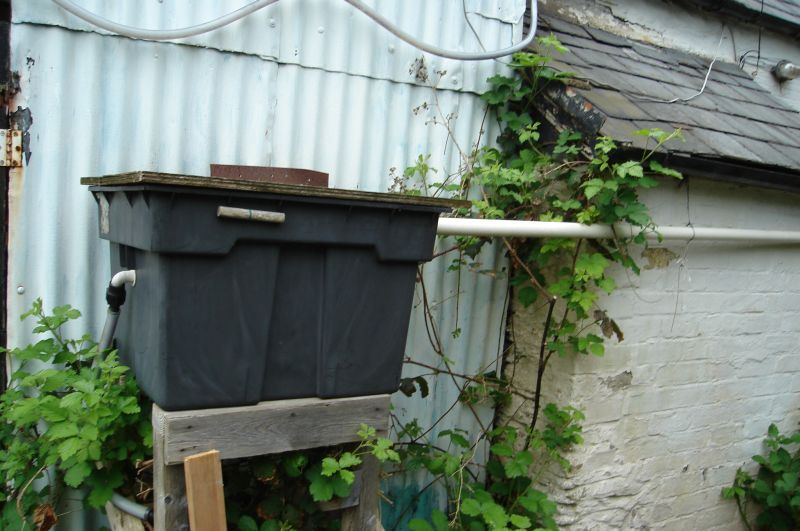 Peter’s house has a number of great ‘green’ features. His place is the base for a neighbourhood car sharing scheme. They run 3 cars, all run on biodiesel, which requires no membership fee and people pay 30p a mile to use it. He also has a very innovative grey water recycling scheme. His upstairs bathroom has a urine separating toilet, and the urine and the bathroom grey water (not the kitchen sink grey water, because it contains too much fat) the combination of which he calls “house juice
James
27 May 7:15pm
Thank you for bringing people like this to the fore. It is these creative, practical responses to our challenges which we cannot celebrate too much.
James
27 May 7:18pm
I hope I have more luck with ‘compostable’ disposable nappies – I am about to have my first child and while we will use cloth nappies mostly, we intend to make use of the compostable varety sometimes. I am a great fan of worm farms and believe they may be capable of chewing their way through these.
Jonathan Kimuge
1 Jun 10:15am
It is a wonderful concept.Thanks for your innovation Peter.Can be replicated elsewhere Kindly contact me.
Robin Peters
20 Jan 5:16pm
Would like to receive any free info to assist in community projects.